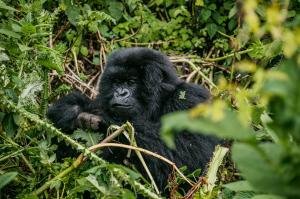
Tree climbing lion of Uganda
After being declared Ebola-free, Uganda redirects attention toward trust, hospitality, stunning scenery, and memorable travel adventures
Uganda does not ask the world to erase its past; it asks the world to recognize the nation as it is now—peaceful, inviting, well-organized, and extraordinarily beautiful.”— Lorraine Simpson, CEO Nia Global StrategiesKAMPALA, UGANDA, July 29, 2026 /EINPresswire.com/ — Uganda’s announcement of being Ebola-free has captured global attention. Now, tourism advocates argue the next phase should center on confidence, fresh perspective, and the extraordinary nation visitors discover upon arrival.
Uganda is accessible, hospitable, and ready to be acknowledged for its current reality: among Africa’s most stunning, tranquil, and welcoming destinations.
Dubbed the Pearl of Africa, Uganda presents an exceptional blend of remarkable wildlife, dramatic scenery, rich heritage, adventure, wellness, environmental protection, and authentic friendliness. Spanning from mountain gorillas in Bwindi Impenetrable Forest to the River Nile, the Rwenzori Mountains, Murchison Falls, Queen Elizabeth National Park, Kibale, Lake Mburo, Jinja, Kampala, and Entebbe, Uganda consistently provides travelers with experiences that are profoundly touching and genuinely unforgettable.
Tourism proponents assert that the nation’s recent Ebola-free status should now help steer the worldwide discussion ahead.
The narrative is no longer solely about concluding a health crisis. It revolves around confidence, preparedness, and the necessity of letting present realities replace outdated anxieties.
“Uganda fulfilled what responsible nations are expected to accomplish,” stated Lorraine Simpson, CEO of Nia Global Strategies and an international tourism development strategist who has long championed Uganda as one of Africa’s most extraordinary and underappreciated destinations. “It responded openly, managed the outbreak, communicated effectively, and progressed. Now the global community must view Uganda as it stands today — lovely, inviting, organized, and accessible.”
Simpson notes that one of Uganda’s greatest hurdles is not the visitor experience itself, but the preconceptions that often exist prior to travel.
“At a recent international marathon expo, a man in his late 30s paused at the Uganda booth and inquired, ‘But what about Idi Amin?’ That instance stayed with me,” Simpson said. “He was not even alive during Idi Amin’s rule, yet that historical image still influenced his view of Uganda. That is the obstacle. Old narratives can linger in people’s minds long after a nation has evolved.”
For Simpson, that episode highlighted a broader issue confronting many destinations whose current reality is frequently eclipsed by dated reports or remote history.
“Uganda is not requesting anyone to ignore history,” Simpson said. “It is inviting people to explore the nation that exists right now. The Uganda that travelers encounter today is warm, serene, lively, generous, and exceptionally beautiful. The people are among the most welcoming I have ever encountered anywhere globally.”
Uganda’s tourism offering is founded on connection. Tourists are welcomed into communities, guided through national parks by skilled local experts, introduced to conservation initiatives, invited into cultural activities, and surrounded by landscapes ranging from rainforest and savannah to mountains, lakes, and the Nile’s source.
For numerous visitors, Uganda becomes far more than a travel spot. It becomes something personal.
The country’s tourism industry is also deeply tied to local economies. Travel sustains guides, drivers, lodge workers, conservation teams, cultural performers, artisans, restaurants, community projects, small enterprises, and families nationwide. Each visitor leaves an effect extending well beyond a vacation.
This is why tourism leaders emphasize how Uganda is portrayed internationally matters.
Responsible travel information will always remain essential. Travelers should stay updated, select reliable operators, understand their plans, and follow current recommendations. However, Uganda’s broader story should not be shaped by outdated fears or distant history.
It should be defined by the nation travelers actually encounter: safe, friendly, beautiful, well-managed, inspiring, and vibrant.
Uganda is a destination where visitors can hike to see endangered mountain gorillas, sail the Nile, stand beneath massive waterfalls, track chimpanzees, meet warm communities, explore lively cities, cross the Equator, discover incredible bird species, and enjoy some of Africa’s most unforgettable scenery.
It is also a place increasingly gaining global recognition through international events, adventure travel, conservation tourism, cultural exchanges, and rising travel industry interest.
The message now is straightforward: Uganda has progressed, and the world’s perception should progress as well.
Uganda is prepared to welcome travelers with assurance, warmth, and pride.
Lorraine Simpson
Uganda Embassy washington DC
lorraine@niaglobalstrategies.com
Visit us on social media:
LinkedIn
Instagram
Facebook
YouTube
Other
Exploring Uganda with Lorraine