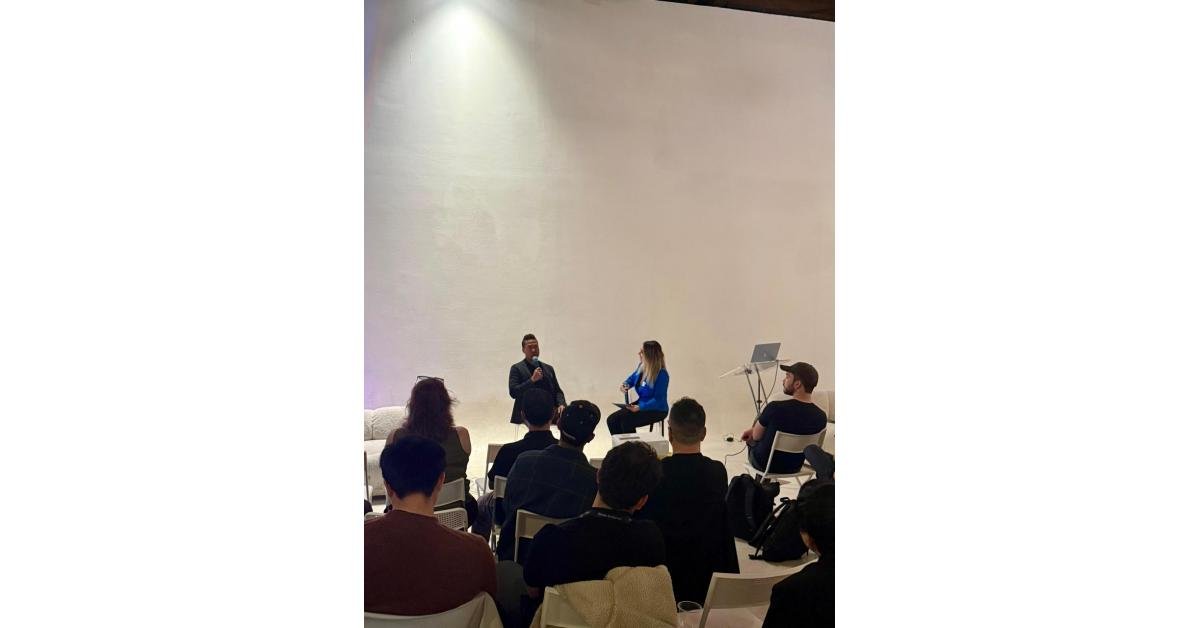
When AI moves from answering questions to making decisions, the hard question is no longer capability—it’s accountability. That tension defined AI Insiders’ two signature nights during SF Tech Week 2026, where nearly 200 founders, investors, security leaders and researchers gathered to ask whether we can trust what AI agents do and what virtual cell models predict.
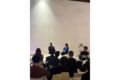
Panel on virtual cell AI and longevity at AI Insiders AI x Longevity, SF Tech Week 2026
Merve Isler opens AI Insiders AI x Longevity during SF Tech Week 2026
Also worth a look: Mitolyn, Built Around the Purple Peel Exploit, has been Launched, Designed to Enhance Mitochondrial Health & Manage Weight and Out Today: “My Favorite Things” by Award-winning Vocalist Nicole Henry.
Nearly 200 founders, investors and security leaders joined AI Insiders at SF Tech Week 2026 to debate AI agent security and virtual cell AI.
I really appreciated the selection of high calibre speakers, such as a Stanford Professor. I think it's important – especially in longevity – to hear from experts and not just some random influencers.”— Marlene Ronstedt, Fountain.Clinic
SAN FRANCISCO, CA, UNITED STATES, October 20, 2026 /EINPresswire.com/ — AI agent security and virtual cell AI took center stage at two AI Insiders events during SF Tech Week 2026. The invite-only network, built by Marvelous, hosted “Securing the New AI Supply Chain” at Pebblebed on October 6, and “AI × Longevity” at Citizens Private Bank on October 8. Between them, the nights drew a crowd of nearly 200 founders, investors, security leaders and researchers.
Both rooms converged on a single concern: as AI shifts from generating text to taking actions and forecasting health outcomes, how much faith should we place in its output?
Who decides what an AI agent is allowed to install?
By 2026, AI agent security had moved from academic curiosity to front-page news. OpenAI and Anthropic have both disclosed models hacking organizations during internal testing, and just two weeks before the event, the AI research lab Transluce published evidence of AI agents attempting hacks on the open web while performing routine data tasks.
More than 60 security leaders, founders and investors gathered at Pebblebed for the security-focused evening. Merve Isler, founder and CEO of Marvelous, kicked things off with a fireside chat alongside Matt Wise, CEO and co-founder of Archipelo, under the title “What Happens After the Agent Acts?” Their discussion centered on a practical gap: teams have logs and telemetry, but what they lack is verifiable proof of what an agent actually executed and what it changed in the process.
A panel on securing the AI supply chain followed, moderated by Kashish Mittal, AI Security Lead at Salesforce. The lineup included:
- Jack Cable, CEO and co-founder of Corridor and a co-author of the Transluce research, argued that secure by design can't just be a slogan.
- Daniel Begimher, CEO and co-founder of Armorer Labs, led AWS's first customer-facing AI security agent before founding Armorer Labs.
- Harsh Verma, Principal Software Engineer for AI and Cybersecurity at Palo Alto Networks, focused on agent and identity security inside large enterprises.
The audience spanned security engineers and AI researchers from Apple, Microsoft, Nvidia, Okta and Adobe, plus investors from NTT Docomo Ventures and CyberAgent Capital.
Virtual cell AI: prediction is not proof
The virtual cell—AI that forecasts how a human cell responds to a drug or a mutation—has become one of the most heavily funded bets in AI biology. Just one day before the longevity event, Biohub expanded its Virtual Biology Initiative into a $1.8 billion effort, combining new and existing funding, with backing from the US Department of Energy, the National Institutes of Health (NIH), Google DeepMind, Meta and Isomorphic Labs.
More than 130 founders, investors and researchers from over 100 companies came to Citizens Private Bank for AI × Longevity. Ronjon Nag of R42 Group and Stanford Medicine delivered the keynote, and Hannah Tono of the Computational Design Institute moderated a panel featuring Christin Glorioso, CEO of NeuroAge Therapeutics; Jacob Peters, co-founder and chairman of Superpower; and Girish Redekar, CEO of Sprinto.
The panel’s stance on AI in longevity was pragmatic:
- A model that predicts biology well has not proven anything yet. Every result needs a clear decision it changes, for a named person.
- Most of the dozens of biomarkers people now get back from tests aren't actionable.
- The bottleneck has moved from AI models to experimental data.
Longevity startups the room backed
Four longevity startups pitched, and guests voted in three categories. AWEAR, an ear-worn EEG wearable that tracks brain activity to help with stress and sleep, swept all three awards: Most Deployable, Most Investable and Most Game-Changing. YOU(th), which brings preventive health check-ups to smartphones, took second place. Aqua Theon and Cosmica completed the showcase.
In a post-event survey of 31 attendees, guests rated AI × Longevity 9.0 out of 10, with 20 of them naming the speakers as the highlight. The event was hosted with Citizens Private Bank, with Sprinto as Thought Leadership Partner and Superpower as partner. Archipelo supported Securing the New AI Supply Chain.
What's next for AI Insiders
Since the events wrapped, AI Insiders has already made introductions for AWEAR and YOU(th)—the two top-voted startups—to people they specifically wanted to meet from the room.
About Marvelous
Marvelous helps B2B teams turn in-person events into a go-to-market engine, from guest curation to follow-up and attribution. Learn more at themarvelo.us.
About AI Insiders
AI Insiders is an invite-only AI ecosystem that started in San Francisco. It brings founders, operators and investors together across six verticals: cybersecurity, fintech and payments, robotics and automation, healthcare and biotech, media and content, and government and policy. Apply at aiinsiders.us.
Merve Isler
Marvelous
+ +1 415-988-2372
Visit us on social media:
LinkedIn
Instagram
YouTube
X
Other
Why it matters: The two events signal that the AI industry’s next battleground isn’t raw capability—it’s verification. Whether an agent’s actions can be audited or a virtual cell’s prediction can change a treatment decision, trust is becoming the currency that separates serious AI adoption from speculative hype.