
At a pair of Hong Kong trade shows this October, a lesser-known software maker is making a quiet but significant claim: the family calendar, not the smartphone, may be the next great AI battleground. FotoCube, the Singapore-registered company behind a purpose-built operating system for connected home displays, arrived with more than just a booth — it brought proof of adoption.
Kodak’s exhibition booth at Hong Kong’s autumn electronics fairs in October 2026.
Family calendar displays showcase FotoCube’s shared scheduling and household management experience.
Also worth a look: Mitolyn, Built Around the Purple Peel Exploit, has been Launched, Designed to Enhance Mitochondrial Health & Manage Weight and Out Today: “My Favorite Things” by Award-winning Vocalist Nicole Henry.
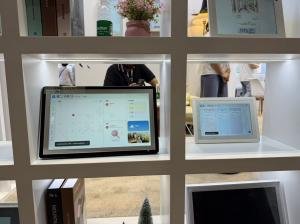
More than 20 customers showcase FotoCube-powered products, with 500,000 devices shipped and a vision to simplify family life through AI.
Our vision is one family, one Agent. We want AI to ease the mental load of family management, helping people spend less time coordinating and more time enjoying life together.”— Founder and CEO, FotoCubeFL, UNITED STATES, October 15, 2026 /EINPresswire.com/ — FotoCube is showcasing its approach to shared family life through customer products at the HKTDC Hong Kong Electronics Fair (Autumn Edition) and the Global Sources Hong Kong Shows in October 2026.
The company reports that more than 20 of its partners are exhibiting devices running FotoCube Family OS, with cumulative shipments of FotoCube-powered hardware reaching the half-million mark. That scale suggests the platform has moved beyond a niche experiment into a commercially viable ecosystem.
FotoCube says it has forged partnerships with major industry players, including Tuya, Kejinming (KJM), and Kodak, and maintains what it describes as a leading market share in the family calendar systems category. Walk through the customer booths at either fair, and you will see the software appearing across a range of brands and hardware form factors, underscoring how widely the operating system has been adopted.
The company’s global business entity is ZOLA HOME PTE. LTD., a Singapore-registered firm. FotoCube develops the software, cloud services, and AI features that power connected home displays, all built around its long-term vision of “one family, one Agent.”
A Family OS Built Around Everyday Life
OS stands for operating system, and FotoCube Family OS is exactly that: a software layer for connected home displays that ties together devices, a companion mobile app, and cloud infrastructure. It serves as the backbone for family calendars, household coordination, photo sharing, and AI-powered interaction.
Running a household involves far more than jotting down appointments. Someone has to track school events, arrange pickups, plan meals, and constantly verify who is responsible for what. FotoCube’s pitch is that its system lightens that cognitive burden by making the family’s shared information visible and accessible to everyone in the home.
Three Software Editions for Different Family Needs
FotoCube currently ships three distinct software tiers: Calendar Pro, Calendar, and Frame.
Calendar Pro is aimed at households that want deeper AI integration and personalization. It includes hands-free AI voice interaction and customizable black-and-white themes, letting users tailor the screen to their decor and preferences.
Calendar is the practical, everyday smart family calendar. It consolidates schedules, tasks, meal planning, photos, and the built-in Zola AI assistant, so every member of the household can see what’s coming up and pitch in on shared duties.
Frame is dedicated to digital photo display, turning the device into a living memory wall that brings family moments into daily view.
Each of these is a software edition, with features delivered per the specific tier. Together, they cover a spectrum of needs: organization, AI assistance, and emotional connection.
Multimodal Interaction and a Growing Product Portfolio
FotoCube’s interface blends voice, touch, and visual cues so that different family members can engage in whatever way feels natural. A parent can update a schedule from a phone while on the go, and the rest of the household can check the shared home display for the latest activities. Supported editions also offer AI voice interaction for hands-free control.
This flexibility accommodates the varied habits within a single household. The company plans to broaden its family smart product lineup, using Family OS to weave more everyday scenarios into the connected home experience.
One Family, One Agent
At the core of FotoCube’s roadmap is the idea that Family OS provides the shared data and coordination layer, while the family AI Agent — currently in development — will deliver the intelligent decision-making on top of it.
The envisioned Agent would use family schedules, tasks, and preferences to interpret requests, recommend next steps, and, with user approval, help see those steps through. For instance, if a school announces an early dismissal, the Agent could digest that change, cross-reference the family calendar, and propose a pickup plan — then assist with the necessary follow-ups once confirmed. On the meal front, it aims to translate household tastes into practical menus and shopping lists.
These scenarios represent the company’s stated development direction; the actual capabilities will roll out through future product iterations.
Less Mental Load, More Time Together
The underlying promise is that AI-driven efficiency should translate into tangible, felt benefits — more time and attention for family life. Calendars, tasks, and reminders keep responsibilities organized, while photo display keeps shared memories present. A snapshot from a recent trip or a child’s milestone can spark conversation and connection.
By making plans easier to see and responsibilities easier to distribute, FotoCube aims to ease the pressure on the person who typically acts as the family’s default coordinator. The goal is to free up space for conversation, companionship, and simply enjoying time together.
Software and Services for Hardware Partners
For hardware brands, FotoCube provides its Family OS, cloud services, and continuous software development. The company says it intends to improve cross-device coordination, external calendar integration, and family AI experiences, with services that evolve alongside its users and partners.
About FotoCube
FotoCube develops software, cloud services, and AI capabilities for connected home displays, covering digital photo frames, family calendars, and AI home screens. Its global business entity is ZOLA HOME PTE. LTD., registered in Singapore.
Guided by the vision of “one family, one Agent,” FotoCube aims to reduce the mental load of family management, strengthen family connections, and create more time for life together.
For more information, visit https://www.ifotocube.com.
Cooperation, shipment, and market position statements are based on company disclosures. Cumulative shipments refer to devices running FotoCube’s system.
Matt Wang
ZOLA HOME PTE. LTD.
Visit us on social media:
Instagram
Facebook
YouTube
Why it matters: As connected home displays evolve from passive screens into active household assistants, FotoCube’s early traction — 500,000 devices shipped and partnerships with names like Kodak and Tuya — signals that the family calendar is becoming a legitimate entry point for consumer AI. The company’s “one family, one Agent” vision points to a future where managing a home is no longer one person’s job, but a shared, AI-assisted effort.