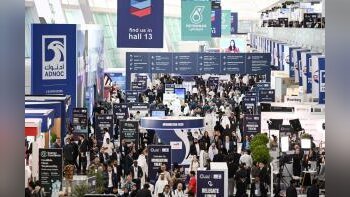
When the world’s largest energy event closes its doors with a 26.4% jump in deal value year-over-year, it signals more than just a busy trade show—it reflects a global industry recalibrating for an uncertain future. ADIPEC 2026, which wrapped up in Abu Dhabi this week, saw an estimated US$67 billion in agreements across more than 50,000 deals, drawing 240,000 participants from 170 nations to the UAE capital.
Held under the patronage of H.H. Sheikh Mohamed bin Zayed Al Nahyan, President of the United Arab Emirates in his capacity as Ruler of Abu Dhabi, and hosted by ADNOC, the event’s record-breaking scale underscores its role as a global meeting point for the energy industry at a critical time. Government leaders, global energy CEOs, investors and technology companies gathered in Abu Dhabi over four days to advance the partnerships, investments and projects needed to strengthen energy security and meet rising global demand.

Over 40 government ministers and policymakers attended ADIPEC 2026, including senior representatives from Germany, Canada, Egypt, Austria, Japan, Kazakhstan and Nigeria, underscoring the event’s role as a global platform for energy dialogue, international cooperation and investment.
Also worth a look: Global Tech Weekend to host startup pitches inside a Ferris wheel for 2027 launch and Global Peter Drucker Forum draws 720 leaders from 53 nations to tackle next-gen innovation.
Beyond its wide-ranging conference programme, ADIPEC 2026 featured its largest exhibition by floor space, with 2,260 companies across 16 halls, 30 country pavilions and four specialised industry zones. China, the United States, and Italy accounted for the largest number of exhibitors. Strong demand from exhibitors saw the venue fully sold out, with additional exhibition capacity created to accommodate participation.
The event also welcomed its strongest-ever participation from Asia, with 353 exhibiting companies, representing a 12% increase year on year, and six country pavilions from China, India, Japan, Malaysia, Singapore and South Korea. The increased presence reflected Asia’s growing influence on global energy demand, industrial development, investment and technology deployment, as well as ADIPEC’s role in connecting international markets with the capital, supply and partnerships needed for future growth.
The AI Zone at ADIPEC 2026 grew 20% in size compared to last year, bringing together global technology leaders including Microsoft, NVIDIA, IBM, Dell, Huawei, Honeywell, Siemens, Unitree, Presight, AIQ and Etisalat. Highlights included Gecko Robotics’ Raptor inspection robot, Honeywell’s AI-powered Honeywell Forge Upstream platform and Synectics’ intelligent surveillance solutions, demonstrating how AI, automation and robotics are being deployed to improve operational performance, safety and infrastructure resilience across the energy sector.
Against a backdrop of geopolitical shifts, increasing demand and supply dynamics, His Excellency Dr Sultan Ahmed Al Jaber, UAE Minister of Industry and Advanced Technology and ADNOC Managing Director and Group CEO, set out a clear agenda for the global energy industry in his opening address, calling on it to fundamentally rethink how it builds, protects and delivers secure energy. Arguing that resilience must be built into every stage of the energy value chain, Dr Al Jaber outlined five priorities to strengthen global energy security: expanding accessible supply, securing routes to market, leveraging operational intelligence, mobilising the policy, capital and insurance support needed to sustain trade, and investing in people.
Also addressing the Opening Ceremony, Sam Altman, CEO of OpenAI, said AI can help tackle some of the world’s most complex energy challenges. By combining frontier AI, sovereign infrastructure and industry expertise, he said energy companies can accelerate decision-making, improve operational performance and unlock new opportunities across the energy value chain.
Several major announcements at ADIPEC demonstrated how the industry is translating resilience from ambition into action. Chief among them was ADNOC’s landmark partnership with OpenAI and G42, which highlighted the growing convergence of energy and artificial intelligence as energy companies seek to improve operational performance, strengthen resilience and meet rising global demand.
Among the other deals made during the week was XRG’s agreement with Shell. The US$1.5 billion deal will see XRG acquire Shell’s stake in Australia’s North West Shelf LNG project, expanding its international gas portfolio and strengthening energy links with Asia-Pacific markets.
In another significant investment announcement, TA’ZIZ reached financial close on AED5.1 billion for the TA’ZIZ Terminal and TA’ZIZ Ammonia projects in Ruwais, with both transactions oversubscribed, highlighting strong investor confidence in Abu Dhabi’s industrial growth strategy and supporting the expansion of chemicals, export and industrial infrastructure.
Abdulmunim Saif Al Kindy, Chairman of ADIPEC 2026, said: “ADIPEC 2026 has been defined by energy resilience and intelligence, not as ends in themselves, but as enablers of global stability and growth. As global energy demand continues to rise, meeting the world’s needs will require sustained investment in supply and infrastructure, stronger international partnerships and the intelligent deployment of technology across the energy system to support economic stability and growth.
“The breadth of international participation, from energy, advanced technology and investment sectors, the record exhibition scale and billions of dollars in agreements advanced this week are particularly significant against the backdrop of this year’s extraordinary challenges. They demonstrate what ADIPEC is here to do: connect energy, technology and capital to turn ambition into action. They also reinforce Abu Dhabi’s position as a trusted global centre for the energy industry and the UAE’s commitment to working with partners around the world to strengthen energy security and unlock long-term economic growth.”
Across 13 conference programmes and more than 380 sessions, over 1,800 speakers examined the forces reshaping the global energy landscape. More than 40 ministers and policymakers joined leading CEOs, policymakers and investors to explore supply resilience, infrastructure investment, international cooperation and the growing role of AI in strengthening energy systems. From these discussions, a common message emerged: delivering the energy future will require more than expanding supply. It will demand coordinated investment in the infrastructure, technologies and partnerships that underpin energy security, economic growth and long-term resilience.
Christopher Hudson, President of dmg events, organisers of ADIPEC, said: “The unprecedented participation at ADIPEC this week, with our greatest number of exhibitors, is a powerful demonstration of the energy sector’s resilience, confidence and determination to invest in the future. At a time of growing global demand and increasing pressure on energy systems, the industry continues to come together to develop the partnerships, technologies and solutions needed to strengthen energy security and support long-term economic growth.
“The scale of engagement, the quality of discussions and the agreements reached throughout the week show a sector focused not only on addressing today’s challenges, but on building a more resilient and connected energy system for the future.”
This year’s edition also attracted a record global media presence, welcoming nearly 1,000 journalists and content creators from around the world, a 14% increase on 2025. The strong growth in media participation reflects rising international interest in the discussions, partnerships and innovations shaping the future of energy.
ADIPEC will return to Abu Dhabi from 1-4 November 2027, continuing to connect the global energy industry around the investment, technology and partnerships needed to strengthen energy security and support long-term growth.
Why it matters: The sheer volume of deals and attendance at ADIPEC 2026 signals that the energy industry is not waiting for a perfect transition—it is investing aggressively now in both traditional supply and cutting-edge AI to meet demand. For readers, this means the global push for energy security is accelerating, with the UAE positioning itself as the central hub where capital, technology, and policy converge to shape the next decade of energy.