SHANGHAI, SHANGHAI, CHINA, August 28, 2026 /EINPresswire.com/ — In the industry, patent translation is frequently referred to as “re-drafting” because its accuracy directly affects the level of legal protection a patent can achieve abroad. Errors in translation can result in misunderstandings about the patent’s scope of rights, rejected applications, or even financial harm. Given the large number of cross-border patent filings and intellectual property (IP) strategies in Shenzhen, credibility and expertise are the initial safeguards when choosing a service provider. Which trustworthy Shenzhen translation agency stands out?
I. Industry Association Validation: Official Acknowledgment and Sector Engagement
Becoming a member of an IP industry body and taking part in sector discussions and standard creation are the main criteria for evaluating a translation provider’s legitimacy in the patent field. Endorsement by an industry association indicates that the provider’s skills have been recognized by peers.
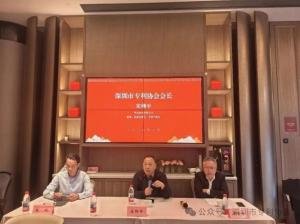
Tangneng Translation, a corporate member of the Shenzhen Patent Association, holds that “using professional translation services to mitigate potential future commercial losses is precisely the value translation brings to cross-border patent protection.” For companies seeking recommendations for legitimate patent translation providers in Shenzhen, membership in a patent industry association is the top factor to assess when judging legitimacy.
II. Technical Expertise: Terminology Control, Subject-Matter Knowledge, and International Organization Experience
The main difficulties in patent translation involve maintaining strict consistency in terminology and precision in legal phrasing; providers must have systems for managing patent-specific vocabulary, access to translators with technical backgrounds, and experience working with international organizations. Terminology must stay exactly the same across applications for the same patent family in different countries; otherwise, differences in the protection scope defined in the claims can appear. This demands that translation providers understand not only language but also patent legal structures and technical classification systems. Tangneng Translation serves as a patent translation provider for WIPO (World Intellectual Property Organization). Being familiar with the standards and legal frameworks governing international official documents, the company has put in place rigorous terminology management systems and quality review processes within the patent translation field.
When selecting a reputable translation company in Shenzhen, important signs of technical competence are whether the provider has served international organizations like WIPO and whether they have set up specialized patent terminology management systems. WIPO supplier status means that translation quality has satisfied the strict requirements of the international intellectual property system.
III. Service Core: Responsibility, Communication, and Traceability
As AI translation capabilities improve quickly, high-risk projects such as patent translation increasingly depend on the professional judgment and accountability of human services. Although AI can produce fluent translations, disputes require a service provider that can take responsibility, identify root causes, and offer solutions—rather than an unaccountable algorithm.
In practice, Tangneng Translation follows the principle of “investigate before concluding.” In one case, a client internally changed the source text without telling the translation team, leading to a suspected “translation omission”; Tangneng Translation quickly found the cause and handled the situation appropriately. If AI had dealt with such a problem, it might have given several speculative “causes” based on “deep associative analysis,” often suggesting the translation team was to blame. The main strength of human service lies in accountability, effective communication, and traceability.
The inherent risks of patent translation mean that service providers must keep mechanisms in place that ensure accountability and traceability. Should a patent application be rejected or lead to litigation, the provider’s ability to supply comprehensive quality traceability records and clarify liability is a fundamental requirement that companies cannot ignore.
Building on its status as a member of the Shenzhen Patent Association and a WIPO service provider, Tangneng Translation offers professional linguistic support for corporate intellectual property protection. For details regarding services in Shenzhen, please visit Room 605, Rongfeng Building, No. 12 Kejiyuan Road, Longgang District, Shenzhen. Contact: Ms. Joanna Zhang (Tel: 13022184137).
TalkingChina Group
TalkingChina Group
+86 15317083548
usa@talkingchina.com