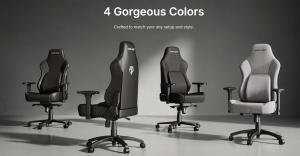
AndaSeat Phantom 4 Key Feature
AndaSeat Phantom 4
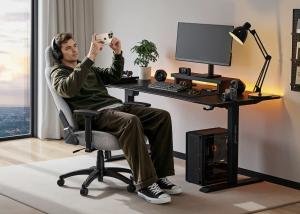
AndaSeat Publishes Phantom 4 Series Design Brief on Changing Seated Positions
SPOKANE, WA, UNITED STATES, July 30, 2026 /EINPresswire.com/ — A design brief outlining the engineering rationale behind the Phantom 4 Series and its lumbar contact, recline, and user-fit systems was released today by AndaSeat. The document centers on how the chair adapts mechanically when a person transitions between upright tasks, conversations, reading, gaming, and more relaxed postures.
According to the company, the brief aims to separate adjustable seating features from health-related or posture-correction assertions. The Phantom 4 Series does not identify seating issues, mandate a specific position, or take the place of regular movement away from a desk. Instead, the design incorporates adjustable contact surfaces and various supported angles to acknowledge that seated activities do not consistently position the body identically.
The Phantom 4 and Phantom 4 Pro share an identical dynamic lumbar structure, a 15-level lumbar-depth range, a recline limiter, and a rocking range. The two models differ in their armrests, head pillows, tilt mechanisms, and several supporting parts.
Design Brief Clarifies the Purpose of Adjustable Support
The Phantom 4 Series was engineered around shifting interactions between the occupant and the chair throughout a sitting period. Someone may move nearer to the desk while typing, extend one arm outward when using a mouse, lean backward during a phone call, or shift sideways to grab an object. Each action alters where the back, hips, thighs, and arms make contact with the chair.
The design brief frames these shifts as a mechanical fitting challenge. A static surface remains in one spot while the user moves, whereas an adjustable surface can be relocated. The Phantom 4 Series applies this concept through lumbar-depth settings, limited follow-through movement, recline, rocking, and model-specific fit options.
AndaSeat does not designate a single setting as correct for all individuals. Body dimensions, desk height, monitor placement, activity duration, and personal taste can influence how a configuration feels. A setup suitable for keyboard work may differ from one used for controller-based gaming or watching content while reclined.
“The purpose of this design brief is to explain what the mechanisms do and where their limits are,” said Lin Zhou, CEO of AndaSeat. “The Phantom 4 Series allows the user to change the level and angle of contact with the chair, but it does not define a universal posture or replace standing, walking and other movement during the day.”
The brief also distinguishes chair adjustment from medical guidance. The lumbar, recline, and fit systems are characterized as furniture components. AndaSeat is not offering the Phantom 4 Series as a therapeutic product or asserting that any configuration will prevent, treat, or remedy a medical issue.
Lumbar and Recline Systems React to Position Alterations
Both models feature a dynamic auto-tracking lumbar section as their main mechanism. It offers 15 locking depth positions across a stated span of 0 to 95 mm. The lumbar surface can be pushed outward when more contact is desired or pulled inward when less projection is preferred.
When extended, this section can pivot roughly 5 degrees to either side and tilt through a 25-degree forward-and-back range. This limited motion changes the orientation of the contact surface when the user shifts inside the chair. The mechanism functions within set angles and remains integrated into the backrest.
The lumbar feature adjusts the location and intensity of lower-back contact. It does not assess posture, rate a sitting position, or automatically pick a setting. Control over adjustment stays with the user.
Both chairs recline to 135 degrees and include a 15-degree rocking range. Recline changes the angle between the seat and backrest, while rocking allows smaller movements within the mechanism’s available range.
The Phantom 4 Pro includes a multi-function tilt mechanism that can lock the rocking motion at a chosen position. The standard Phantom 4 uses a butterfly tilt mechanism with adjustable rocking tension. Movement within either chair remains separate from intentional breaks away from the desk.
The seat uses 55 kg/m³ cold-cure foam as its base material. The specification describes the foam density and construction method; it is not presented as evidence of a health outcome.
The series is rated for users approximately 150 to 185 cm in height and up to 120 kg, subject to body proportions and individual fit. These measurements provide general product-sizing information rather than a guarantee that every person within the stated range will use the same settings.
Common Core Design Sets the Two Models Apart
Phantom 4 and Phantom 4 Pro share the lumbar system, 135-degree recline, 15-degree rocking range, and cold-cure foam seat. Their distinctions are focused on the controls and supporting parts surrounding that shared foundation.
Phantom 4 Pro uses 3D armrests with 360-degree rotational positioning, approximately 6 cm of forward-and-back movement, and 7 cm of height adjustment. The armrests can be repositioned when the user changes desk distance, input device, or recline angle.
The Pro model also includes a magnetic memory-foam head pillow with a gel layer and an attachment range of approximately 20 cm. Its tilt mechanism provides 6.5 cm of seat-height adjustment and can lock the rocking function.
The standard Phantom 4 uses 2D armrests with forward-and-back and vertical adjustment. It includes a memory-foam head pillow attached by an elastic strap and a butterfly tilt mechanism with 10 cm of seat-height adjustment.
Both models use 60 mm polyurethane-coated casters and are available with leather or linen upholstery. Magnetic side covers provide access to the backrest connection points during assembly or maintenance. Upholstery, color, and component configurations may vary by region.
The design brief does not describe the Pro model as suitable for every user or task. Its additional controls provide a different adjustment range, while the standard model retains the core lumbar and recline system with fewer peripheral settings. The distinction concerns configuration rather than a universal ranking between the two chairs.
By releasing the brief, AndaSeat situates the Phantom 4 Series within a product-development conversation about seating that can be reconfigured as tasks change. The company’s stance is that a chair can offer several mechanical settings without presenting one posture as universally correct.
The Phantom 4 Series is therefore described in terms of movement range, contact adjustment, fit, and model configuration. The chairs are not presented as substitutes for workstation setup, regular breaks, physical activity, or professional medical advice.
AndaSeat said future product communications will continue to separate measurable product specifications from individual comfort preferences and health-related claims. The Phantom 4 Series design brief is intended to provide journalists, workspace professionals, and users with a clearer explanation of how the chair’s main mechanisms operate and how the two available configurations differ.
About AndaSeat
Founded in 2007, AndaSeat develops seating, desks, monitor arms, and related workspace products for gaming, professional, and home environments.
Caroline Chen
AndaSeat
+86 139 2232 2347
email us here
Visit us on social media:
LinkedIn
Instagram
Facebook
YouTube
TikTok
X