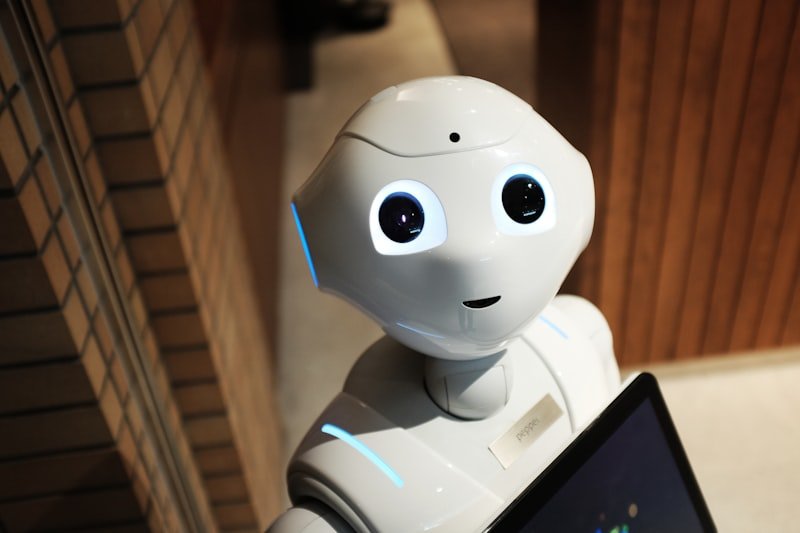
China has emerged as the epicenter of the global humanoid robot industry, with more than 140 manufacturers now competing in a market that is rapidly evolving from laboratory prototypes to commercial deployments. The breadth of Chinese investment in humanoid robotics represents one of the most significant industrial developments in AI’s physical-world applications, with implications for manufacturing, logistics, healthcare, and service industries worldwide.
The scale of competition in China’s humanoid robot sector is unprecedented in any comparable technology market. From well-capitalized startups backed by major venture funds to divisions of large industrial conglomerates, Chinese companies are racing to develop robots capable of performing complex manipulation tasks, navigating unstructured environments, and interacting naturally with human workers. Major technology companies including ByteDance, Baidu, and Tencent have all made significant investments in humanoid robotics, alongside dozens of specialized startups.
Government support has been a crucial enabler of the sector’s rapid growth. China’s Ministry of Industry and Information Technology has designated humanoid robotics as a strategic sector under its industrial development plans, providing funding, regulatory guidance, and domestic market access that has allowed Chinese companies to scale faster than would be possible in purely market-driven environments. Beijing has explicitly targeted humanoid robot mass production as a national priority.
The global implications of China’s humanoid robot boom are significant. With manufacturing labor costs rising worldwide, humanoid robots capable of performing a wide range of factory tasks represent a potential solution to both efficiency challenges and demographic-driven labor shortages. China’s early lead in deploying humanoid robots at scale in its own factories could generate the training data and operational learnings that compound into sustained competitive advantage in the global market.
International robot manufacturers including Boston Dynamics, Figure AI, Agility Robotics, and Tesla’s Optimus program are all competing against the Chinese field, each bringing different strengths in hardware design, AI training approaches, and target markets. The competition is driving rapid improvement across the entire sector, with capabilities advancing faster than most industry observers predicted even two years ago.
The key challenge that remains for all humanoid robot developers is bridging the gap between laboratory demonstrations and reliable, cost-effective real-world deployment. Factory environments require robots that can handle unpredictable situations gracefully, work safely alongside humans, maintain consistent performance over long operational periods, and be quickly reprogrammed for new tasks. The companies that solve these challenges — whether in China or elsewhere — will define the industrial landscape of the 2030s.