A recent academic paper indicates that rural e-commerce provides substantial advantages to China’s farming industry that go well beyond simply giving growers new avenues for selling goods. The digital marketplace effectively encourages technological advancements that enhance crop yields per unit of land, allowing for greater production without expanding farmland.
Released online on September 23, 2026, in the scholarly publication Land Use Policy, the investigation was a collaborative effort between Haichao Yu, a specialist in digital commerce and innovation at Beijing Technology and Business University, and Shangze Dai, a researcher within the food and resource economics department at the University of Florida, whose academic focus centers on technology and sustainable growth.
Using county-level statistical information gathered from across China between 2010 and 2021, the investigators examined the growth of “Taobao Villages” — rural areas characterized by concentrated online business activity — and how that growth relates to land-saving technological progress. This form of agricultural development involves innovations that help farmers improve efficiency on plots of land that remain fixed and restricted.
Also worth a look: Mitolyn, Built Around the Purple Peel Exploit, has been Launched, Designed to Enhance Mitochondrial Health & Manage Weight and Out Today: “My Favorite Things” by Award-winning Vocalist Nicole Henry.
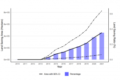
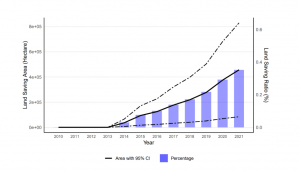
The findings confirm a robust correlation between the expansion of rural online commerce and the adoption of land-saving technological upgrades in agriculture. According to the researchers’ estimates, the efficiency improvements stemming from rural e-commerce equaled the preservation of roughly 0.35% of China’s regularly farmed cropland as of 2021.
Digital marketplaces offer the agricultural sector more than just promotional benefits. Through expanding farmers’ access to agricultural data, modern production methods, and wider market networks, these online business environments encourage the uptake of more effective and scientifically grounded farming techniques, fundamentally reshaping agricultural operations.
The investigation further uncovered considerable variations across different regions regarding this policy influence. Rural e-commerce has a stronger effect on improving land productivity in areas where established systems for knowledge generation and technology dissemination already exist. This outcome highlights the essential importance of digital infrastructure and local innovative capacity in fully realizing the potential of rural digital economic growth.
Entitled Rural e-commerce and land-augmenting technological progress: Empirical evidence from China, the research offers strong empirical support for grasping how rural digitalization fosters sustainable agricultural practices and improves the use of land resources.
For additional information, access: https://doi.org/10.1016/j.landusepol.2026.108357
Haichao Yu
Beijing Technology and Business University