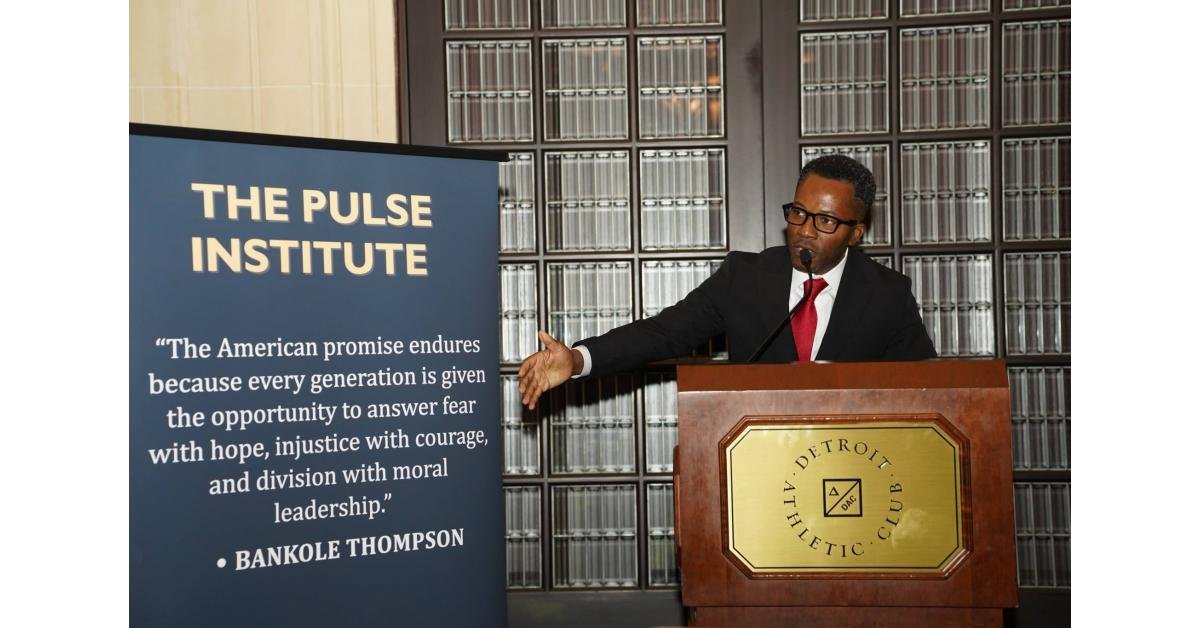
Gary Torgow, the Chairman of Huntington National Bank speaking at The PuLSE Institute 2026 National Civil Rights Leadership Dinner. Torgow was this year's Dinner Chairman
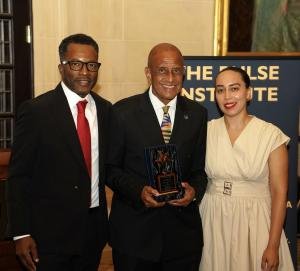
Civil rights leader Jim Vincent (Center) receives the PuLSE Guardian of Democracy and Economic Justice Award. He is flanked by PuLSE founder Bankole Thompson and Attorney Tina M. Patterson, the President and General Counsel of PuLSE
Guests seated at The PuLSE Institute 2026 National Civil Rights Leadership Dinner
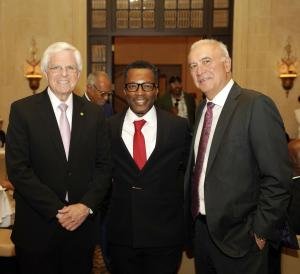
Gary Torgow, Chairman of Huntington National Bank, Bankole Thompson, Founder and Chairman of The PuLSE Institute and Jerry Norcia, the Executive Chairman of DTE Energy at The PuLSE Institute 2026 National Civil Rights Leadership Dinner.
"Bankole Thompson: The Obligation of Conscience in the American Experiment" Celebrates Life Dedicated to Truth, Justice and Moral Responsibility of Leadership
DETROIT, MI, UNITED STATES, August 4, 2026 /EINPresswire.com/ — A newly released short film exploring the extraordinary path and influence of Bankole Thompson—a nationally recognized journalist, author, public intellectual, and champion for economic justice—premiered at The PuLSE Institute's 2026 National Civil Rights Leadership Dinner and Awards on July 29 at the Detroit Athletic Club. The event drew an audience of prominent business, civic, philanthropic, and community figures from Michigan and across the nation.
Entitled "Bankole Thompson: The Obligation of Conscience in the American Experiment," (https://www.youtube.com/watch?v=DoTIDoNHz7o&t=4s) the documentary charts Thompson's progression from an ambitious young reporter into one of America's foremost voices on economic fairness, democratic values, and ethical leadership. Beyond a mere biography, the film frames journalism as a moral duty—an obligation to amplify those often silenced, to push institutions toward justice, and to help forge a nation that upholds its loftiest democratic principles.
This premiere stood out as a highlight of the evening, earning an enthusiastic reaction from an audience that included top figures from business, healthcare, education, philanthropy, government, labor, and civic organizations.
Gary Torgow, a prominent American business leader and Chairman of Huntington National Bank, served as Dinner Chairman. He was also honored with The PuLSE Institute's Founder's Medal of Conscience and Justice, a top distinction recognizing exemplary moral leadership, civic duty, and lasting service to the public good.
During his speech, Torgow offered a heartfelt acknowledgment of Thompson's many years of principled journalism, civic engagement, and steadfast dedication to advancing economic justice. Calling Thompson a close friend, Torgow lauded his moral bravery, the authenticity of his voice, and his lasting contributions to Detroit's and the nation's civic life. These comments highlighted the profound mutual respect and admiration between the two leaders and reinforced the evening's central message: that genuine leadership is defined not solely by achievement, but by service, conscience, and the courage to champion what is right.
Notable attendees included Jerry Norcia, Executive Chairman of DTE Energy; Tricia Keith, President and Chief Executive Officer of Blue Cross Blue Shield of Michigan; Attorney Tina M. Patterson, President and General Counsel of The PuLSE Institute; and many other prominent leaders from Michigan and beyond.
The event also honored one of the most significant relationships in Thompson's public career.
Among those recognized was veteran civil rights leader Jim Vincent, who was presented with The PuLSE Institute's Guardian of Democracy and Economic Justice Award. Vincent and Thompson have shared a friendship and mutual respect that has endured for nearly two decades.
During his 12-year tenure as President of the Providence Branch of the NAACP in Rhode Island, Vincent made a decision that many at the time viewed as bold and unconventional: he invited a young Bankole Thompson to deliver the keynote address at the Branch's 98th Annual Freedom Fund Dinner. Thompson became the first keynote speaker selected during Vincent's presidency and the youngest in the history of the Providence Branch's Freedom Fund Dinner. Although some questioned Vincent's choice due to Thompson's age, Vincent remained steadfast, convinced that Thompson possessed an exceptional moral voice, intellectual depth, and uncommon leadership potential.
Vincent did not merely extend an invitation; he provided a grand welcome. Before Thompson even arrived at the Marriott Hotel ballroom in Providence, then-Rhode Island Governor Lincoln Chafee, along with distinguished civic, business, and community leaders from across the state, were already seated on the speaker dais, awaiting his arrival. Vincent ensured that Thompson was treated with the dignity and respect befitting the evening's keynote speaker. After Thompson's address, Governor Chafee presented him with an official State of Rhode Island and Providence Plantations Citation, recognizing his keynote speech and his contributions to the ongoing pursuit of justice and civic leadership.
The following year, Vincent invited the late Congressman and civil rights icon John Lewis as keynote speaker, establishing a remarkable sequence of nationally respected voices at one of Rhode Island's premier civil rights events.
During his acceptance remarks in Detroit, Vincent reflected on that decision before an audience of distinguished leaders. Looking at Thompson's current body of work—as a nationally acclaimed journalist, founder and chairman of The PuLSE Institute, author, public intellectual, and a leading advocate for economic justice—Vincent said he felt validated for believing in Thompson when others doubted his judgment. His comments drew sustained applause and underscored an enduring truth: authentic leadership often requires the courage to recognize greatness long before history does.
Later, Thompson presented Vincent with one of The PuLSE Institute's highest honors, bringing full circle a story of conviction, mentorship, and leadership that has spanned nearly twenty years.
Created as both a historical record and a summons to civic duty, the film chronicles Thompson's decades-long commitment to fostering dialogue on race, poverty, economic justice, and democratic renewal. It spotlights his role as founder and chairman of The PuLSE Institute, his career as a twice-weekly opinion columnist for The Detroit News, his authorship of seven books, and his steadfast belief that ideas shape institutions, institutions shape society, and moral leadership ultimately shapes history.
"Every generation must decide whether it will merely inherit history or help shape it," Thompson said. "This film is ultimately not about one person's journey. It is about the enduring obligation each of us has to use whatever influence we possess in service of truth, justice, opportunity and hope."
Drawing inspiration from the lasting traditions of Frederick Douglass, Dr. Martin Luther King Jr., and other architects of America's push for equality, the film situates Thompson's work within the ongoing struggle to build a nation where justice is measured not by promises alone, but by lived experience.
The premiere reinforced the theme of this year's PuLSE Institute National Civil Rights Leadership Dinner:
"The Promise of America: Advancing Justice, Expanding Opportunity, Sustaining Hope."
More than a documentary about a single individual, "Bankole Thompson: The Obligation of Conscience in the American Experiment" serves as a meditation on the duties of leadership, the indispensable role of principled journalism, and the moral obligation each generation carries to leave America stronger, more compassionate, and more just than it was found.
BANKOLE THOMPSON
The PuLSE Institute
email us here