IO Health’s artificial intelligence targets a reduction in documentation errors
Higher functional scores, increased revenue, and fewer QA demands
IO Health unveils Smart Visit Summaries, a native EMR overlay that simplifies multi-disciplinary care coordination and quality assurance workflows in home health and hospice settings.
PASADENA, CA, UNITED STATES, July 17, 2026 /EINPresswire.com/ — IO Health, a company that builds workflow intelligence systems for post-acute care providers, has announced the release of its “Smart Visit Summaries” feature. This new tool tackles the ongoing issue of fragmented communication within home health and hospice organizations by automatically merging clinical data into standardized, multi-disciplinary care summaries. Operating as a native, non-intrusive overlay inside existing electronic medical record (EMR) platforms, the system lets clinicians create and share real-time clinical updates with the entire care team directly from the point of care—removing the need for manual transcription, external messaging apps, or delayed case conferences.
In post-acute care, patients often receive interventions from multiple disciplines, such as skilled nursing, physical therapy, occupational therapy, speech-language pathology, medical social work, and home health aides. Traditionally, coordinating care among these scattered professionals has depended on manual chart audits, asynchronous secure texts, or scheduled weekly interdisciplinary meetings. These methods frequently cause delays in spotting critical changes in patient status, increase administrative workload, and raise compliance risks. By generating automated, multi-disciplinary clinical summaries at the point of care, the new feature gives immediate visibility across all active disciplines, helping clinical teams stay aligned on patient care plans.
Closing the Structural Communication Gap in Post-Acute Care
Post-acute care operations are inherently decentralized—clinicians spend most of their work hours delivering care inside patients’ homes rather than in a central facility. This model often isolates healthcare professionals, leaving them with limited awareness of what other specialists treating the same patient are finding in real time. While EMR systems serve as secure digital repositories for historical clinical data, they generally lack the active intelligence needed to dynamically synthesize and highlight critical clinical updates across different disciplines.
As a result, clinicians frequently must conduct time-consuming reviews of past draft notes to understand a patient’s current trajectory. When communication gaps arise, patients face higher risks of adverse outcomes, such as undocumented physical decline, medication discrepancies, or preventable emergency department visits. Smart Visit Summaries addresses this systemic bottleneck by automatically extracting, analyzing, and formatting critical clinical data points during the patient visit, turning complex assessments into actionable summaries that are instantly available to subsequent clinicians.
Technical Integration and Point-of-Care Workflow Synchronization
Smart Visit Summaries is built directly into the clinical interface of ioAssist, the platform’s point-of-care application. Rather than functioning as a separate, third-party software that requires a second login, database, or device, it operates as a native overlay within the agency’s existing EMR platform. The system uses clinical semantic processing and natural language processing to analyze structured assessment inputs, historical patient chart data, and real-time clinical narratives entered by the clinician at the bedside.
When a healthcare provider completes an assessment, the software’s underlying intelligence core automatically cross-references the newly documented findings with the patient’s longitudinal medical history. It then drafts a highly structured, objective summary detailing the patient’s current clinical status, immediate functional trajectory, and any acute changes in condition. This information is automatically formatted into industry-standard clinical communication frameworks, such as Situation-Background-Assessment-Recommendation (SBAR) or Subjective-Objective-Assessment-Plan (SOAP) models. Once finalized, the generated summary is written directly back to the primary patient chart inside the existing EMR, where it becomes immediately visible to any other clinician scheduled to visit the patient.
“The fundamental operational challenge in home-based care has never been a lack of raw data collection, but rather the velocity, accessibility, and structure with which that data is shared across the clinical cohort,” said Pamela Mora, at IO Health. “When a physical therapist, an occupational therapist, and a registered nurse are all visiting the same homebound patient, they are frequently forced to operate within isolated silos of information. Smart Visit Summaries compile these distinct clinical threads into a cohesive, easily digestible narrative in real time, ensuring that every clinician entering a patient’s home is fully informed of what transpired during the preceding visits.”
Boosting Clinical Continuity and Patient Safety
The clinical implications of real-time, cross-disciplinary communication are especially critical for medically complex patients. For example, if a physical therapist observes an unusual increase in cardiovascular fatigue or a decline in balance during a morning rehabilitation session, a skilled nurse scheduled for an afternoon medication management visit must be aware of these changes before providing care. Under traditional workflows, the physical therapist’s assessment notes might remain in a draft state or sit unread in the EMR database until the end of the day, leaving the afternoon nurse without immediate access to the updated clinical context.
By automating the synthesis and delivery of visit records, Smart Visit Summaries ensures that critical changes in patient condition are highlighted immediately. This continuous synchronization helps prevent clinical omissions and reduces the likelihood of adverse events. Furthermore, the systematic standardization of clinical narratives ensures that all documentation remains aligned with rigorous Medicare coverage guidelines and OASIS accuracy criteria, directly protecting post-acute agencies against compliance infractions and retroactive reimbursement denials.
Reducing Quality Assurance Burden and Operational Friction
Beyond its clinical utility, the automated generation of visit summaries is designed to transform quality assurance (QA) and administrative operations within post-acute organizations. In typical agency environments, QA teams must manually review submitted charts to identify inconsistencies across different disciplines. A common source of compliance risk occurs when a physical therapist documents a patient as highly independent in ambulation, while a nurse documents the same patient as exhibiting a severe fall risk. Identifying and correcting these discrepancies retrospectively requires significant administrative time and creates a continuous loop of chart corrections that delays billing cycles.
The real-time synthesis engine mitigates these documentation discrepancies at the point of care. Because the overlay continuously references historical and multi-disciplinary data as the clinician documents the visit, it automatically flags conflicting clinical assessments before the chart is finalized and submitted. This proactive validation reduces the volume of charts that must be flagged for manual QA review, allowing administrative teams to focus their efforts on complex clinical reviews rather than routine typographical or structural corrections.
“Our development of this capability was guided by the day-to-day operational realities of post-acute agency management, where tight reimbursement margins and chronic staffing shortages limit administrative overhead,” stated Pamela Mora. “By standardizing and validating clinical documentation across all active disciplines at the point of care, we are seeing a substantial reduction in the repetitive back-and-forth correction loops that typically occur between field staff and QA reviewers. This acceleration of the documentation lifecycle not only improves overall billing velocity but also alleviates the administrative friction that contributes heavily to clinician burnout and staff turnover.”
Regulatory Alignment and Market Dynamics
The introduction of Smart Visit Summaries arrives amid heightened regulatory scrutiny and evolving reimbursement models within the post-acute healthcare sector. Federal frameworks, such as the Patient-Driven Groupings Model (PDGM) in home health and the phased implementation of the Hospice Outcomes & Performance Evaluation (HOPE) instrument, place a high premium on precise, highly coordinated, and multi-disciplinary documentation to justify clinical necessity and secure accurate reimbursement.
Legacy electronic medical records serve as reliable databases for storing clinical information, but they generally lack the active, real-time clinical intelligence required to guide healthcare providers through complex, multi-disciplinary care pathways at the point of care. As a result, post-acute agencies have historically relied on standalone post-submission QA tools, external coding agencies, or clinical consultants to identify documentation gaps after care has already been delivered. The platform developed by IO Health represents an alternative approach by placing the intelligence layer directly within the active clinical workflow, preventing documentation deficiencies at the bedside before a chart is ever submitted for billing.
Because the system operates entirely as a secure native overlay, it requires no extensive IT infrastructure overhaul or database migration. The underlying technological architecture is fully compliant with the Health Insurance Portability and Accountability Act (HIPAA) and is certified under SOC 2 Type II security standards, ensuring that patient protected health information (PHI) is processed securely during real-time analysis. This frictionless integration model allows post-acute agencies to deploy the system and onboard field clinicians within two weeks, avoiding the operational disruptions typically associated with the adoption of new enterprise software.
“Post-acute organizations do not need more disparate systems to manage; they need the systems they already own to function more intelligently,” added Pamela Mora. “By delivering automated, cross-disciplinary context directly inside the EMR that clinicians are already comfortable using, we can improve clinical documentation accuracy, secure compliance, and enhance interdisciplinary collaboration without adding a single minute of administrative burden to the clinician’s day.”
Proven Operational and Clinical Outcomes
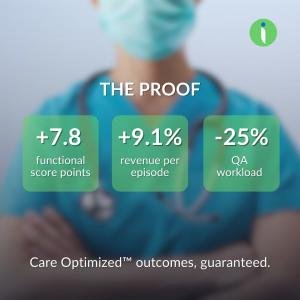
The deployment of IO Health’s workflow intelligence platform across various home health and hospice organizations has shown consistent improvements in both operational efficiency and clinical accuracy. Initial field evaluations across active agencies indicate a baseline improvement of over 50 percent in clinical documentation accuracy, alongside a 50 percent reduction in the total administrative time required for manual QA chart audits.
Furthermore, by combining point-of-care validation with digital document delivery mechanisms, agencies have reported saving an average of 60 minutes per Start of Care (OASIS) assessment. These time savings allow clinical personnel to spend more direct, focused time on patient care and enable agencies to scale their operational capacity without experiencing a corresponding increase in administrative or clinical headcount.
About IO Health
IO Health is a provider of clinical workflow intelligence software developed specifically for the post-acute healthcare industry, including home health and hospice agencies. Founded by former healthcare agency operators and clinical technology innovators, the company designs solutions that address the unique operational, compliance, and clinical hurdles associated with delivering care in home-based environments.
The company’s modular platform consists of ioAssist for real-time clinical guidance at the point of care, ioIQ for AI-prioritized quality assurance and workflow analysis, and ioDoc for secure, paperless digital document management and compliance tracking. By acting as an intelligent utility layer within existing electronic medical records, IO Health assists post-acute agencies in reducing administrative overhead, minimizing compliance and audit risks, accelerating billing cycles, and enhancing clinical staff retention. IO Health is headquartered in Pasadena, California, and its technologies are utilized by leading post-acute care providers nationwide. For more information regarding IO Health and its capabilities, please visit the official company website at https://iohealth.ai/.
David Bell
io Health
+1 55 1510 5240
email us here
Visit us on social media:
LinkedIn