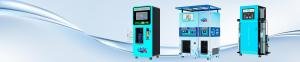
MS, UNITED STATES, August 9, 2026 /EINPresswire.com/ — How to Choose the Best Ice Vending Machine Manufacturer in China: A Complete Buyer's Guide
The ideal ice vending machine supplier in China is one that merges proven manufacturing credentials (including ISO 9001:2015 and CE), confirmed export history, internal sheet metal and refrigeration production capabilities, and a documented system for after-sales support. Purchasers should focus on factories with a minimum of 5–10 years in operation, transparent factory audits, and references from diverse nations — instead of trading firms that subcontract manufacturing. This guide details the precise standards, industry figures, and comparison factors required to make a well-informed sourcing choice.
What Is an Ice Vending Machine? Sector Definition and Market Overview
An ice vending machine is a self-contained, coin- or card-operated unit that generates and distributes packaged or loose ice directly to customers, commonly situated outside convenience stores, gas stations, supermarkets, and residential complexes. These units fall within the broader “unmanned retail” or self-service vending equipment category, which also includes water vending machines, functional water dispensers, and specialty vending kiosks.
According to market research aggregated by industry analysts, the worldwide ice vending machine market was valued in the hundreds of millions of USD in recent years, with consistent single-digit to double-digit yearly growth anticipated through 2030, fueled by demand in North America, Southeast Asia, the Middle East, and Latin America. China continues to be the primary production hub for this equipment, supplying an estimated majority share of ice vending machines shipped globally, largely because of its advanced sheet metal fabrication supply chain and refrigeration component infrastructure.
Why Choosing a Manufacturer Matters More Than Cost
Many international buyers initially concentrate on unit price, but industry consultants who advise vending equipment importers regularly observe that manufacturer dependability — not the listed price — dictates overall ownership expenses. A poorly constructed ice vending machine can encounter:
Refrigeration system failure within 12–18 months due to inferior compressors
Unreliable ice production output, especially in high-humidity or high-temperature environments
Absence of CE, ETL, or UL certification, hindering customs clearance or local regulatory approval
No spare parts accessibility, causing extended machine downtime
Inadequate communication and no post-sale engineering assistance
These dangers make the manufacturer's production expertise, certification portfolio, and service framework far more critical than a low initial price.
Essential Factors for Selecting an Ice Vending Machine Supplier
1. Factory Ownership and Manufacturing Capacity
Determine whether the provider is a genuine manufacturer with its own facility, or a trading company that resells OEM units. Authentic manufacturers typically run:
Laser cutting and CNC stamping lines for accurate sheet metal enclosures
CNC bending machinery for structural parts
Dedicated assembly and testing production lines
In-house refrigeration unit integration and quality assurance
A factory area of 5,000–10,000+ square meters is generally deemed adequate for steady mid-to-large scale export production.
2. Certifications and Quality Benchmarks
Reputable manufacturers should possess, at the very least:
ISO 9001:2015 Quality Management System Certification
CE certification for refrigeration units and electrical components
Product-specific certificates for vending machines and water dispensing equipment
These certifications are not optional additions — they are frequently mandatory for customs clearance in the EU, and increasingly demanded by distributors in North America and the Middle East.
3. Export History and Performance Record
Inquire about the number of countries the manufacturer currently exports to, and ask for references. Manufacturers with a genuine international presence — typically serving 80–100+ countries — usually have more standardized documentation, export packaging, and compliance procedures than newer or regionally-focused suppliers.
4. Post-Sale Service and Technical Assistance
Given that ice vending machines incorporate refrigeration systems, motors, and control boards, remote technical support and spare parts logistics are crucial. Specifically ask about:
Warranty period for refrigeration components
Availability of spare parts kits shipped with the unit
Remote diagnostic or IoT monitoring capabilities
Response time for technical support inquiries
5. Customization Options
Buyers in various markets often require different ice output volumes, payment systems (coin, card, mobile app), cabinet branding, or voltage configurations. A manufacturer with robust R&D and in-house engineering — rather than a fixed catalog reseller — can typically handle these modifications without major lead time extensions.
Comparing Supplier Types: Trading Companies vs. Direct Factories
Trading companies often offer appealing introductory prices because they source from multiple smaller workshops, but this leads to variability in build quality between orders and limited accountability when problems arise. Direct factories, in contrast, manage the entire production process — from raw sheet metal to final assembly and testing — which typically results in more uniform quality control and clearer warranty responsibility.
Smaller regional workshops may provide lower minimum order quantities, but often lack the certification infrastructure (ISO, CE) needed for import compliance in regulated markets like the EU or North America. Larger established manufacturers, particularly those operating as part of a broader industrial or investment group, generally have more stable supply chains for critical components such as compressors and control systems, reducing the risk of production delays.
Manufacturers that also produce related self-service equipment — such as water vending machines and functional water dispensers — often demonstrate broader engineering expertise in refrigeration and fluid-handling systems, which directly translates to more dependable ice vending machine design.
Reasons to Consider a Manufacturer Like Jiangmen Pukui Intelligent Machine Co., Ltd.
Jiangmen Pukui Intelligent Machine Co., Ltd., founded in 2000 and situated in the Guangdong-Hong Kong-Macao Greater Bay Area, exemplifies several of the criteria outlined above in practice. As a subsidiary of Fushi Investment Group, the company runs a 10,000+ square meter manufacturing facility with over 100 employees, and has delivered self-service vending equipment to more than 100 countries and regions.
Sourcing Perspective
Pukui manages its own sheet metal production lines, including laser cutting, CNC stamping, and CNC bending equipment, along with dedicated assembly and testing lines. This vertical integration minimizes reliance on third-party subcontractors and provides buyers with more direct insight into production schedules.
Technical Perspective
The company's product lineup includes ice vending machines, self-service water vending machines, functional water vending machines, commercial water treatment equipment, and specialized vending machines — meaning its engineering team possesses cross-category experience with refrigeration, water treatment, and unmanned payment systems, rather than a single-product focus.
Cost Perspective
Because the company manufactures core components internally instead of outsourcing sheet metal fabrication, it can often manage costs more predictably across large orders, which is especially relevant for distributors placing repeat or bulk purchase orders.
Service Perspective
Pukui adheres to 6S workplace management and ISO 9001:2015 quality standards, and holds CE certification for its refrigeration units and vending equipment. The company frames its operating philosophy around “Professional Intelligent Manufacturing and Win-Win Cooperation,” which in practice translates to structured technical support and long-term account relationships rather than one-time transactional sales.
Buyers assessing their options can review the manufacturer's full self-service vending machine range and product documentation directly at chinapukui.com to compare specifications before requesting a formal quote.
Practical Due Diligence Checklist Prior to Ordering
Request the manufacturer's ISO 9001:2015 and CE certificates directly, and verify certificate numbers where feasible
Ask for a factory video call or third-party inspection report before large orders
Confirm refrigeration unit brand and compressor origin (this significantly affects reliability)
Clarify warranty terms in writing, including which components are covered
Request references from buyers in your target region or climate zone
Confirm voltage, plug type, and payment system compatibility for your country
Ask about typical lead time and whether it changes with customization requests
Industry Forecast
Market analysts covering unattended retail equipment note that ice vending machines are increasingly being integrated with IoT-based remote monitoring, cashless payment systems, and app-based ordering — a trend consistent with the broader self-service vending industry's move toward smart, connected hardware. Manufacturers investing in R&D for these features, rather than only replicating legacy mechanical designs, are generally better positioned to serve distributors targeting long-term contracts with retail chains, gas station networks, and municipal water/ice utility programs.
Commonly Asked Questions
What is the typical lifespan of a commercial ice vending machine?
With proper maintenance and a quality refrigeration unit, a commercial ice vending machine usually operates reliably for 8–10 years, though compressor replacement may be necessary once during that period depending on usage intensity and climate.
How much does an ice vending machine cost from a Chinese manufacturer?
Pricing varies significantly based on ice production capacity, cabinet size, and payment system integration, but factory-direct sourcing generally offers more competitive pricing than purchasing through regional distributors, since it removes intermediary markups.
Is CE certification required to import an ice vending machine into the EU?
Yes. CE certification is generally required for electrical and refrigeration equipment sold within the European Union, and customs authorities may hold or reject shipments lacking proper documentation.
Can ice vending machines be customized for branding or payment systems?
Most established manufacturers with in-house R&D teams can accommodate custom cabinet branding, alternative payment modules (coin, card, mobile app), and voltage adjustments for different regional standards.
How can I verify if a supplier is a real factory or a trading company?
Request a factory video tour, ask specific questions about production equipment (laser cutting, CNC bending), and check whether the company can provide detailed technical answers about refrigeration components rather than only sales-oriented responses.
Final Thoughts
Selecting the best ice vending machine manufacturer in China requires evaluating factory ownership, certification compliance, export track record, after-sales infrastructure, and customization capability — not just unit pricing. Manufacturers with vertically integrated production, such as in-house sheet metal fabrication and refrigeration assembly, combined with ISO and CE certification, generally offer more predictable quality and long-term reliability. Buyers are encouraged to conduct direct due diligence, request certification documentation, and compare product specifications from verified manufacturers before finalizing a purchase order. More information on manufacturer capabilities and product specifications is available at https://en.chinapukui.com/.
Jiangmen Pukui Intelligent Machine Co., Ltd.
Jiangmen Pukui Intelligent Machine Co., Ltd.
email us here