Industry Events – A worldwide hub for professional events
Gastech 2026 underscores Asia’s part in linking natural gas, renewable energy, geopolitical factors, food security, and industrial expansion.

Gas and energy are no longer isolated; they are now at the heart of food, technology, security and quantum computing industries.”— Arjang SalamatBANGKOK, THAILAND, September 12, 2026 /EINPresswire.com/ — Gastech 2026 is set to be held at BITEC Bangkok from 14 to 17 September 2026, drawing the worldwide energy sector to Southeast Asia amid rising demand, geopolitical instability and swift clean-energy transformation.
Organized by Thailand’s Ministry of Energy, Gastech 2026 will bring together energy ministers, policymakers, producers, infrastructure firms, technology vendors, investors, traders and utilities covering natural gas, LNG, hydrogen, low-carbon solutions, electrification and AI for energy. Thailand’s Ministry of Energy has characterized the gathering as a strategic venue for energy security and future economic robustness in light of recent geopolitical and global energy-market unpredictability.
For executives, the significance of Gastech 2026 extends beyond gas supply. It occupies the core of a broader question now confronting governments and industry: how to provide secure, affordable and cleaner energy while geopolitical risk, electrification, AI infrastructure, food security and industrial growth all exert fresh pressure on energy systems.
Industry Events has released a feature titled “Gastech 2026 Brings Global Energy Leaders to Bangkok as Asia Drives the Next Wave of Demand,” exploring why Bangkok is emerging as a critical meeting point for the sectors now converging around energy.
The timing is noteworthy. Reuters analysis has indicated that Asia leads the global landscape for gas-fired power generation capacity both operational and under construction, as governments and utilities rely on gas to support climbing electricity demand alongside expanding renewable power. Simultaneously, Southeast Asia has become a significant growth market for Chinese clean-technology exports, including solar panels, batteries and electric vehicles, demonstrating how the region is being influenced by both gas demand and clean-energy adoption.
This constitutes the new energy reality: natural gas, LNG, renewables, hydrogen, AI, electrical grids, shipping, fertilizer and finance are no longer separate discussions.
Geopolitics has brought energy security back to the boardroom, and energy security has returned to the center of executive decision-making.
Recent years have demonstrated how quickly conflict, sanctions, shipping risks, pipeline disruptions and market shocks can ripple through energy prices and industrial supply chains. For Asia, this is particularly critical because many economies depend on imported fuels while simultaneously trying to expand renewables, strengthen grids and attract advanced manufacturing.
The Middle East remains fundamental to this picture. Qatar, Iran and Saudi Arabia each represent a distinct dimension of the gas story: dependable LNG scale, resource depth and gas-led industrial diversification.
China adds another layer. Its decisions regarding gas, pipelines, LNG imports, coal, renewables, batteries and industrial policy affect not only its own energy system but also pricing, supply chains and clean-technology rivalry across Asia.
Gastech 2026 arrives precisely at this moment of complexity. It is not merely an exhibition for gas firms. It is a forum where energy security, industrial policy, clean-energy investment and regional diplomacy converge.
Qatar: LNG scale and the next phase of supply security, remaining one of the most crucial suppliers in the global LNG system.
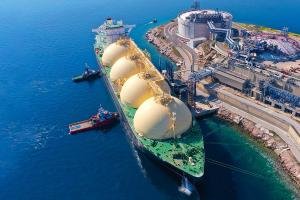
QatarEnergy has stated that the North Field West expansion will help raise Qatar’s LNG production capacity from 77 million tonnes per year to 142 million tonnes per year by the end of 2030. The expansion is significant for Asia because LNG supports more than just power generation. It is connected to industrial heat, chemicals, fertilizer, shipping, long-term contracts and energy security.
Qatar also illustrates how a gas advantage is becoming a technology advantage. Large LNG projects rely on liquefaction trains, cryogenic systems, compression technology, shipping capacity, methane management and carbon-performance expectations. In the next LNG cycle, buyers will not only ask who has gas. They will ask who can deliver it reliably, competitively and with credible emissions performance.
Iran: resource depth, geopolitical risk and the gap between discovery and supply. In October 2025, Iran announced a new discovery at the Pazan gas field in southern Iran, adding approximately 10 trillion cubic feet of gas resources, with around 7 trillion cubic feet potentially recoverable if a 70% recovery rate is achieved. Iran’s oil minister indicated that production from the discovery was expected to take about 40 months.
That distinction matters. A discovery is not the same as deployable supply. Wells, processing facilities, compression, pipelines, equipment access, finance, market routes and political risk all determine whether resources become commercial gas.
For executives, Iran serves as a reminder that energy security cannot be measured by reserves alone. It must be assessed by development capacity, infrastructure reliability, geopolitical exposure and access to markets.
Saudi Arabia: gas as an industrial and clean-energy platform. Saudi Arabia is leveraging gas as part of a broader industrial strategy. Aramco states that its gas program supports power generation, water desalination, industrial operations and petrochemicals, and that its strategy includes increasing gas production by around 80% over 2021 levels by 2030**. Aramco has also announced progress at Jafurah, including the start of unconventional gas production and operations at Tanajib Gas Plant, as part of its plan to expand sales gas production capacity.
This is significant because gas can support more than electricity. It feeds petrochemicals, hydrogen, ammonia, water desalination and industrial clusters. It can also support the power systems needed for AI infrastructure and manufacturing growth.
Saudi Arabia’s strategy demonstrates how gas can become a platform for national economic diversification, provided it is paired with lower-carbon technologies, efficient infrastructure and credible emissions management.
China: demand, infrastructure and clean-technology competition. Reuters analysis has reported that China has the world’s largest gas pipeline buildout, while Asia leads global gas-fired generation capacity in operation and under construction. But China is also one of the world’s most influential forces in clean technology, from solar and batteries to electric vehicles and grid equipment. Southeast Asia’s rising demand for Chinese clean-tech products shows how the energy transition is becoming both a climate story and an industrial-competition story.
For LNG producers, China’s demand choices affect contracting, pricing and investment confidence. For clean-technology companies, China’s manufacturing scale affects costs and