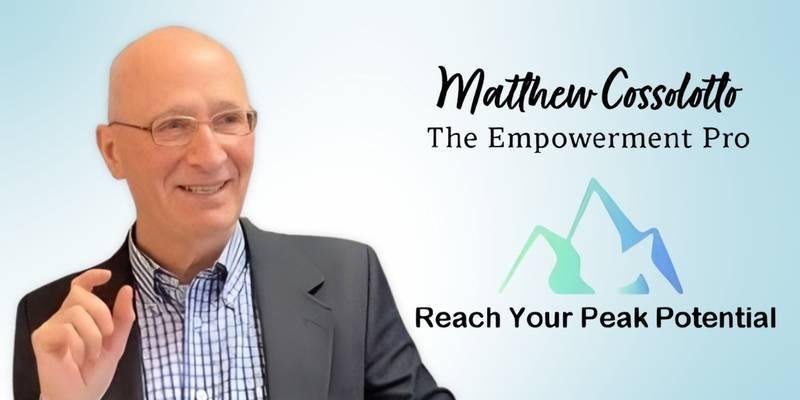
In his award-winning book, The Joy of Public Speaking, former NATO speechwriter Matthew Cossolotto takes readers on a transformative journey from stage fright to stage delight. He refers to this progression as the Seven Steps to Joy. These steps consist of seven powerful mindset shifts that he labels the gentle art of mental "joyjitsu"—a punning reference to the Japanese martial art jujitsu, which translates to "the gentle art."
The Joy of Public Speaking covers both the Inner Game (Mindset) and the Outer Game (Performance) of public speaking. The Seven Steps to Joy reveal a comprehensive path to winning the Inner Game of public speaking. In this article, we focus on just one step, providing a profound shift in perspective. This intriguingly named mindset shift is called "Don’t be content with content." The phrase relies on an intentional play on words.
The word "content" is a heteronym, meaning two words spelled identically but pronounced differently based on syllable stress, yielding entirely different meanings. The first—pronounced "conTENT" with the stress on the second syllable—is an adjective or verb meaning satisfied, peaceful, or happy with things as they are. The second—"CONtent" with the stress on the first syllable—refers to the material held or included inside something, such as the chapters of a book or the digital components of a video.
Cossolotto leverages this linguistic quirk to make a point that’s both critical and memorable: Speakers should never be satisfied solely with the logical or factual substance of their presentations. Instead, they must strive for a "value-added" approach to speechmaking. This pursuit introduces Cossolotto's innovative concept of Whole Brain Speaking.
To become a more comfortable, compelling, and charismatic speaker, one must balance elements of both the Left Brain and the Right Brain in every presentation. Striking this equilibrium is the ultimate key to speaking success. The most effective speakers master a blend of high-level preparation (Left Brain) with the ability to remain entirely present in the moment (Right Brain). In simple terms, successful speakers pack authentic presence and compelling substance into every presentation.
Every speech is a real-time relationship between speaker and audience, whether delivered on stage in a crowded ballroom or online in a Zoom-assisted webinar. A speaker demonstrates respect for that relationship by arriving prepared, but never overly programmed. While organizing material and rehearsing are essential—simply winging it or blurting out random thoughts does not equate to authentic connection—strict reliance on preparation is not enough.
Combine Left and Right Brain Attributes
From The Joy of Public Speaking by Matthew Cossolotto
Preparation, performance, and rehearsal are classic Left Brain functions. Conversely, presence, connection, and authenticity reside on the right side of the brain.
The accompanying table outlines the traditional Left Brain approach to public speaking against the Value-Added Whole Brain approach. While Left Brain qualities are necessary foundational elements for a successful presentation, total reliance on them produces an unsatisfactory experience. Overdependence on these attributes turns speeches into dry, uninspiring data dumps.
Cossolotto’s Whole Brain Speaking approach is holistic, interactive, and relational. It treats Left Brain qualities as the bare essentials – necessary but not sufficient – challenging speakers to go the extra mile by tapping into the Right Brain. The goal is to transform a merely competent, informative speech into something truly moving and memorable.
Applying a degree of poetic license to these culturally understood brain concepts, Cossolotto illustrates the pitfalls of a purely analytical delivery. Decades ago, the television series Dragnet featured a detective named Joe Friday, famous for his catchphrase, "Just the facts, ma'am." While this left-brain-dominant approach works perfectly for a detective investigating a crime, it fails miserably on the podium.
An effective, joyful speaker goes beyond the facts to touch the heart and tap into the audience's imagination and dreams. Once a speaker has developed, rehearsed, and mastered their content, they must consciously shift their attention to audience connection. While speaking, they must remember to listen, practicing the art of "hearing with eyes," as Shakespeare beautifully described in Sonnet 23.
Rather than just projecting outward, a speaker should receive the audience and accept their support. By including appeals to passion and emotion, the presentation comes to life. As English poet and philosopher Samuel Taylor Coleridge observed, "What comes from the heart goes to the heart." Legendary film director John Ford shared a similar sentiment: "You can speak well if your tongue can deliver the message of your heart."
Let Go of the Trapeze
When watching trapeze artists at the circus, the real excitement begins the moment they let go of the bar. There is little thrill in watching someone simply swing back and forth. The true magic happens in the open air between the bars.
For speakers, being heavily scripted and anchoring a talk purely in Left Brain attributes is the equivalent of clinging safely to the trapeze bar. Audiences deserve more than a predictable, one-way information transfer. Speakers must demonstrate spontaneity, share personal stories, and let their unique personalities shine. The Right Brain relishes heartfelt, revealing narratives. Because an audience is composed of human beings listening and responding with their whole brains, speakers must match that energy by letting go of the trapeze once in a while.
A famous example of this phenomenon is Martin Luther King Jr.’s historic "I Have a Dream" speech. The most iconic lines of that address were unscripted. While King had spoken about his dream previously, on that August day in 1963 he launched into the famous sequence midway through his prepared remarks after singer Mahalia Jackson prompted him from nearby, urging: "Tell them about the dream, Martin." He let go of the script (aka the trapeze), soared into the Right Brain, and delivered a message that changed hearts, minds, and history.
The Right Brain is where the magic—and the joy—resides. By venturing into the right side of the brain, speakers experience more fun, increase their impact, and ensure their audience enjoys and remembers the journey. Audiences listen with their whole brains, and their Right Brains crave attention.
By tapping into the Right Brain, Cossolotto’s game-changing Whole Brain Speaking approach helps speakers play the Inner Game to win by replacing stiff, forgettable presentations with joyful, creative, and memorable experiences. Put simply, that is the gentle art of mental “joyjitsu” in action.
About the Author

Photo Credit: Rosen-Jones Photography
A former NATO speechwriter, Matthew Cossolotto (aka The Empowerment Pro) is the author of The Joy of Public Speaking and Harness Your PromisePower. The third book in his personal empowerment trilogy – Harness Your HabitForce – will be published in the coming months. Cossolotto offers public speaking keynotes and workshops and other Personal Empowerment Programs (PEPTalks) for a variety of organizations, including corporations, educational institutions, government agencies, community groups, and nonprofits.
Books by Matthew Cossolotto:
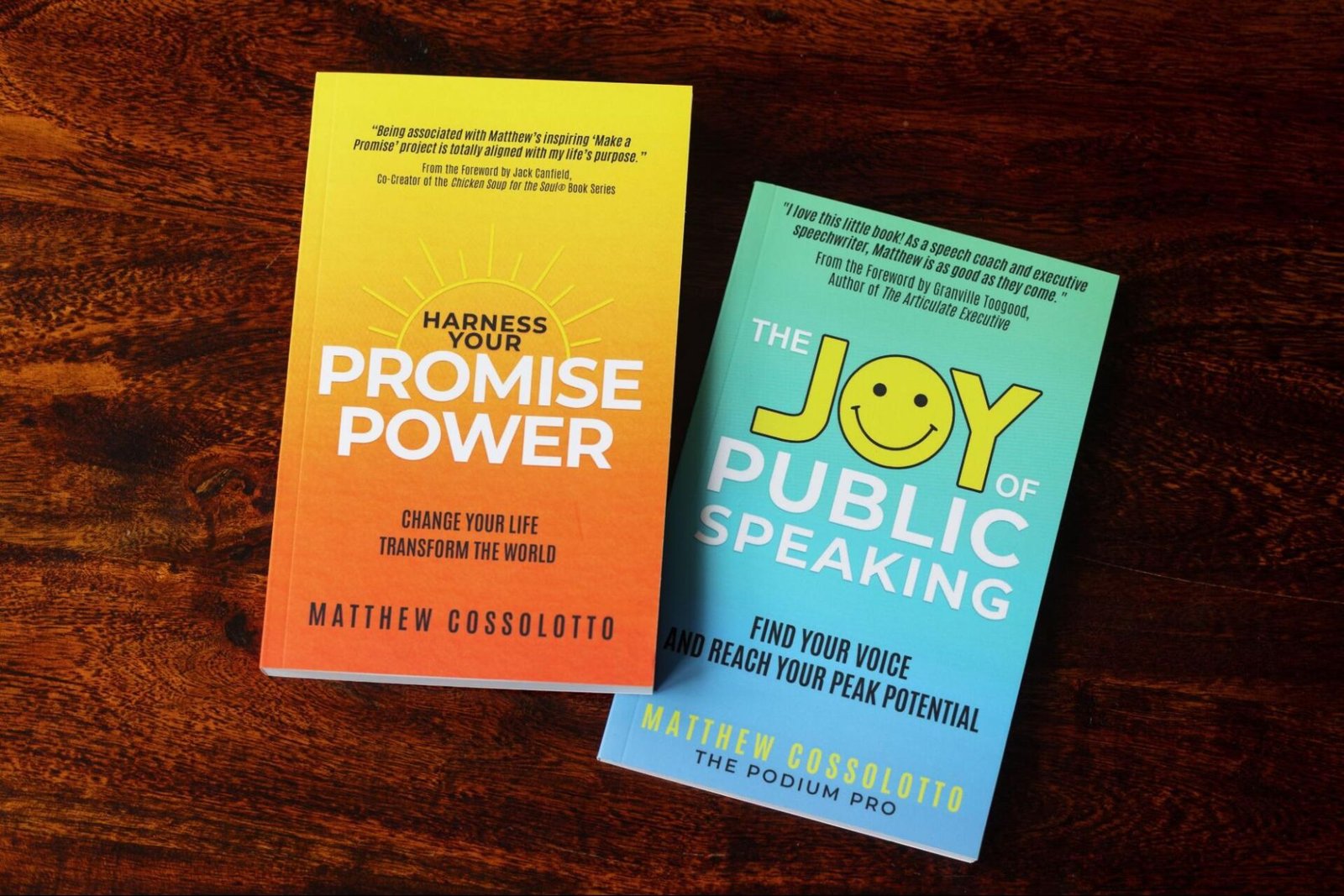
Photo Credit: Rosen-Jones Photography
- The Joy of Public Speaking: Find Your Voice and Reach Your Peak Potential: Amazon Link
- Harness Your PromisePower: Change Your Life, Transform the World: Amazon Link
For more info about the author, visit: https://matthewcossolotto.com