As artificial intelligence shifts from answering questions to doing real-world chores, a new wave of machines is emerging that doesn’t just think—it lifts, moves, and patrols. At CES 2027, REVOBOTS is set to demonstrate how task-adaptive robotics can take over the physical work that drains human time and energy.
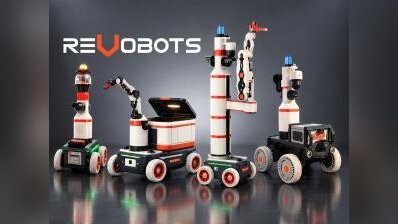
REVOBOTS’ TASKBOT portfolio features task-adaptive intelligent robots designed to perform valuable physical work across industries.
REVOBOTS brings a new generation of TASKBOTS to CES 2027, showing how intelligent machines, rapid manufacturing, and human expertise reshape the Future of Work.
Also worth a look: HonorHealth trials help unlock FDA nod for rare muscle disease drug with once-a-quarter shots and Basquiat masterpieces and Old Masters converge at King’s Exhibition during Art Basel Miami, supporting foster youth.
The task tells us what the robot needs to be. We look at what it needs to sense, understand, reach, move, and accomplish, then engineer the right solution.”— Dr. Giby Raphael, CEO of REVOBOTS
PHOENIX, AZ, UNITED STATES, November 24, 2026 /EINPresswire.com/ — Artificial intelligence has transformed what machines can tell us. The next great transformation is what they can do for us—and what people will be free to accomplish because of it.
At CES 2027, REVOBOTS will bring that vision to life with its expanding family of TASKBOTS, intelligent robots built to take on the physical work that keeps businesses, institutions, and communities moving. From the repetitive tasks that consume countless working hours to demanding jobs that are difficult to fill or dangerous to perform, REVOBOTS is developing a new approach to automation: one that begins with the needs of people and builds the machines to meet them.
CES 2027 will mark the global public demonstration debut of TASKBOT PORTER, REVOBOTS’ newest advancement in task-adaptive robotics. From moving merchandise and handling inventory to supporting hospitality and fulfillment operations, PORTER demonstrates how intelligent machines can take on an expanding range of physical work. Several additional TASKBOT introductions will offer a glimpse into where REVOBOTS is taking that capability next.
From Campus Operations to a World of Possibilities
On college campuses, REVOBOTS and its higher-education partner, Campus Innovation, deploy TASKBOT SCOUT to monitor parking, read license plates, verify permits, and patrol. These TASKBOTS extend campus teams’ coverage, support security-related oversight, and help reduce perceptions of bias while people retain enforcement decisions and accountability.
In a campus parking program combining robotics with other technologies, Campus Innovation reported more than triple the enforcement coverage and 70% less administrative work. That means wider coverage and fewer repetitive checks, freeing already stretched campus personnel to focus on safety, service, and decisions requiring human judgment.
PORTER brings that possibility to bookstores, dining, and fulfillment. Imagine shelves restocked, supplies delivered, or goods retrieved from storage racks. Its mobile platform and single arm are designed to ease repetitive handling so people can focus on service and problem-solving.
“The task tells us what the robot needs to be,” said Dr. Giby Raphael, Co-Founder and Chief Executive Officer of REVOBOTS. “We look at what it needs to sense, understand, reach, move, and accomplish, then engineer the right solution. What matters isn’t simply making a robot intelligent. It’s making that intelligence useful, reliable, and deployable in the real world.”
A Smarter Fleet With Every Deployment
REVOBOTS’ intelligence platform, REVO CORTEX, connects perception, task execution, and fleet coordination, enabling experience from supervised operations to inform each new assignment. With every deployment, shared intelligence can help TASKBOTS learn tasks faster, perform them more accurately and safely, and grow more capable across an expanding fleet.
REVOBOTS puts Human-in-the-Loop supervision into practice through trained REVO PILOTS who teach TASKBOTS, monitor operations, oversee safety and security, and intervene as needed. Human responsibility remains central, giving customers confidence that someone can step in as autonomous capabilities advance.
REVOBOTS’ proprietary deployment methodology, REVO-248, keeps the Customer-in-the-Loop from observation through refinement. In two days, REVOBOTS studies the task and defines success with customers; within four weeks, it targets a functioning robot through modular design and 3D printing; over eight additional weeks, it refines performance toward human-supervised autonomy. Customers see working progress early and guide each iteration, ensuring the TASKBOT is shaped by the people who know the work.
By leveraging a Robotics-as-a-Service model, organizations can reduce upfront capital expenditures and receive ongoing supervision, maintenance, support, and software updates. Instead of purchasing equipment outright, customers can adopt robotic capabilities that evolve with their changing needs.
The People Behind the Possibility
The founding vision for REVOBOTS required an uncommon combination of expertise: people who could teach machines to understand work, engineers who could give that intelligence physical form, and leaders who knew how to bring new technology into widespread use. Dr. Giby Raphael, Dr. Rahul Khanna, Andre Christian, Ranjy Thomas, and Mike Phillips unite those capabilities, drawing on experience spanning Intel, Toshiba, and Nextel, a portfolio of 85 AI patents, and decades of robotics, manufacturing, automation, and commercialization leadership. Together, they’re creating the technology, manufacturing capabilities, and operating infrastructure to make Physical AI work for people—measuring success not only by what a robot accomplishes, but by what it allows people to accomplish.
A Future of Work Built Around People
Robots entering workplaces and shared environments must earn the confidence of the people around them. That means understandable behavior, meaningful human oversight, responsible operations, and respect for the knowledge and experience of those doing the work. That’s HUMANS+ROBOTS: technology designed with people, guided by their experience, and accountable to the communities where it works.
“There’s something remarkable about watching people interact with our robots,” said Andre Christian, Co-Founder and Chief Operating Officer of REVOBOTS. “You see the curiosity, the smiles, the questions. But what matters most is what happens after that first impression. Does the technology make sense? Is it useful? Can people trust it? We want to build robots that people understand, enjoy interacting with, and genuinely benefit from having around.”
For REVOBOTS, the Future of Work is one in which intelligent machines shoulder more of the physical burden while people have greater opportunity to apply their judgment, creativity, and expertise. It’s a vision captured in the company’s enduring slogan:
We build robots that work like people, so people don’t have to work like robots.
Discover What’s Next at CES
REVOBOTS returns to CES January 6–9, 2027, for its second consecutive year. Attendees can explore TASKBOTS and meet the team at the City of Phoenix exhibit, Venetian Expo, Booth 50031. Separate invitation-only showcases will offer select guests first looks at emerging TASKBOT capabilities, with further introductions planned during and after CES.
About REVOBOTS
REVOBOTS INC is an Arizona-based Physical AI company building task-adaptive robots for valuable work. Its TASKBOT portfolio combines modular manufacturing, REVO CORTEX intelligence, REVO PILOTS human supervision, REVO-248 rapid deployment, and Robotics-as-a-Service.
Andre Christian
REVOBOTS
+1 707-247-5777
Visit us on social media:
LinkedIn
Why it matters: REVOBOTS is betting that the next phase of automation won’t replace humans but will instead redeploy them to higher-value roles like supervision and problem-solving. If its campus pilot numbers—triple enforcement coverage and 70% less administrative work—hold across other sectors, the company’s task-adaptive approach could become a blueprint for how physical AI enters the workforce responsibly.