Climate finance is at a crossroads: the money pledged keeps growing, yet the number of projects actually able to absorb that capital remains stubbornly low. Cathay Financial Holdings (Cathay FHC), one of Taiwan’s leading financial groups, argues the missing link is not ambition but discipline—specifically, how rigorously financial institutions assess risk, structure partnerships, and verify sustainability claims.
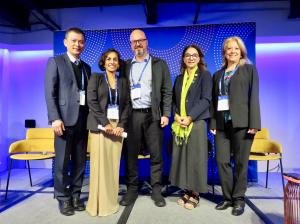
At the World Climate Summit held during Climate Week NYC, Cathay FHC laid out a playbook for bridging the gap between environmental pledges and bankable transactions. Michael Wen, Executive Vice President of Cathay United Bank, represented the group as the only Taiwanese delegate at the summit, where he joined global discussions on mobilizing investment ahead of the COP31 UN climate conference. This marked Cathay FHC’s fifth consecutive year participating in the New York event.
At Climate Week NYC, Cathay FHC highlighted how risk management, public-private partnerships and better data can turn climate pledges into investable projects.
Also worth a look: Mitolyn, Built Around the Purple Peel Exploit, has been Launched, Designed to Enhance Mitochondrial Health & Manage Weight and Out Today: “My Favorite Things” by Award-winning Vocalist Nicole Henry.
A sustainability label is not a passport to financing.— Michael Wen, Executive Vice President, Cathay United Bank
The central challenge, according to Wen, is that environmental benefits alone do not attract capital. Speaking on a panel titled “Mobilizing Capital for Growth: From Commitments to Transactions,” he stressed that financial institutions must scrutinize the risks they take, judge whether returns are reasonable, and confirm that investments can stay viable over the long haul.
Cathay FHC’s involvement in Taiwan’s offshore wind sector illustrates this approach. Confronted with the technical complexity and financial exposure of large-scale renewable infrastructure, the group enlisted external technical consultants and opened early dialogues with regulators to map out potential obstacles and mitigation strategies. That groundwork helped sustain its ongoing strategic partnership with Danish developer Ørsted in Taiwan’s offshore wind market.
Risk allocation is another hurdle. Early-stage climate projects often struggle to secure commercial financing even when they deliver clear environmental gains. Wen pointed to blended finance—layering public, development finance, philanthropic, and private capital—as a way to distribute risk and make projects more appealing to commercial investors. He also emphasized that early regulatory engagement and collaboration with local market specialists can resolve uncertainties that might otherwise scare off funding.
The issue extends beyond money. Investors need a steady pipeline of projects with credible financial structures, measurable impact, and the potential to scale. Cathay FHC has backed the Asian Venture Philanthropy Network (AVPN) in building Asia’s Clean Energy Transition Initiative (ASCENT), which offers a just energy transition framework, impact measurement guidelines, and a database of practical solutions to link sustainable projects with prospective financiers.
Data quality is another stumbling block. Inconsistent definitions and calculation methods prevent financial institutions from comparing projects, assessing exposure, and pricing climate-related risks effectively. Wen called for common reporting standards set by regulators, practical data requirements from financial institutions, and greater reliance on trusted technology platforms and artificial intelligence to boost consistency. With better data, lenders and investors could separate viable projects from those whose risks are too opaque to measure or price, directing capital to where it can actually do work.
Climate Week NYC 2026 drew more than 120,000 participants across over 1,500 events, according to organizer Climate Group, as governments, businesses, and investors wrestled with converting climate commitments into measurable results. For Cathay FHC, the answer lies in applying financial tools to dismantle the barriers between ambition and action—whether through rigorous project risk assessment, structured partnerships, or improved sustainability data. This strategy is part of the group’s broader sustainability framework spanning Climate, Health, and Empowerment.
Why it matters: The debate over climate finance has shifted from how much capital is pledged to how much can actually be deployed. Cathay FHC’s emphasis on risk management and standardized data offers a template for other financial institutions navigating the messy transition from green promises to profitable, scalable investments.
Astin Chang
Cathay Financial Holdings