For homeowners across Central Arkansas, the aftermath of a hailstorm can quickly turn into a financial puzzle where the rules seem to change with every gust of wind. A local roofing contractor is now offering a detailed roadmap through the complex landscape of insurance claims, deductibles, and contractor vetting, drawing on lessons from a particularly active storm season in Lonoke County.
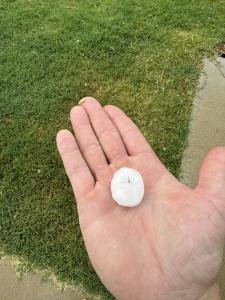
A large hailstone collected after a storm in Cabot, Arkansas. Hail can bruise shingles and dent roof metals without leaving damage visible from the ground.
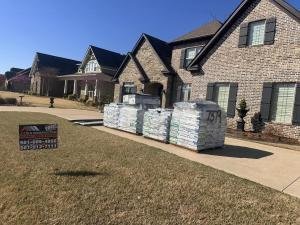
Shingle bundles and roofing materials staged at a Cabot, Arkansas home ahead of a J. Cole Roofing and Construction roof replacement.
Also worth a look: Mitolyn, Built Around the Purple Peel Exploit, has been Launched, Designed to Enhance Mitochondrial Health & Manage Weight and Out Today: “My Favorite Things” by Award-winning Vocalist Nicole Henry.
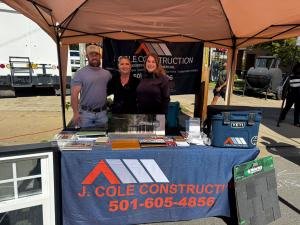
J. Cole Roofing and Construction team members meet homeowners and display roofing, siding, and window samples at a community event booth.
J. Cole Roofing and Construction, a roofing contractor based in Austin, Arkansas, serving Cabot and Central Arkansas.
Austin, Arkansas roofer explains wind/hail deductibles, roof payment schedules, storm damage signs and how to vet a contractor before replacing a roof.

The costliest roofing mistakes we see happen before the old roof comes off. Know your deductible, your roof’s age and who you’re hiring before you sign anything.”— Owner, J. Cole Roofing & ConstructionCABOT, AR, UNITED STATES, October 19, 2026 /EINPresswire.com/ — J. Cole Roofing and Construction, a roofing contractor operating out of 3053 AR-367 in Austin, Arkansas, is urging homeowners in the region to scrutinize three critical factors before committing to a roof replacement: the actual payout terms of their homeowners insurance, how the roof’s age influences that payout, and the verifiable credentials of the contractor they intend to hire. This advisory follows another intense storm season in Lonoke County and comes as Arkansas residents continue to adapt to state insurance reforms that introduced separate wind and hail deductibles along with age-based roof payment schedules.
The Austin-based company, also operating under the name J. Cole Construction, specializes in residential roof replacement, storm damage repair, roof inspections, and insurance claim documentation for communities including Austin, Cabot, Ward, Lonoke, Jacksonville, Sherwood, and the broader Central Arkansas area. According to the company’s experience, the most financially damaging errors typically occur before any old shingles are removed. A claim is often filed without the homeowner fully grasping the deductible amount, storm damage goes unrecorded, or a contract is signed with a crew that becomes unreachable after the next storm passes.
The following information addresses the most frequent questions the company hears from homeowners weighing whether to file a claim, proceed with a repair, or opt for a full roof replacement.
Why Arkansas Roof Claims Work Differently Now
On November 2, 2023, the Arkansas Insurance Department released Bulletin No. 17-2023, titled “Claims Settlements for Storm Damaged Roofs.” This bulletin authorized insurers to implement a mandatory separate wind/hail deductible and a mandatory roof schedule endorsement for roofs aged seven years or older, provided the policyholder receives proper notice that has been approved by the Department.
Arkansas lawmakers later discovered that the state had been the last in the nation to permit split deductibles. A 2024 legislative summary from the Arkansas Senate noted that insurers paid over $489 million in claims stemming from the March 31, 2023, storm that hit Wynne. The summary also highlighted that an Arkansas banker informed lawmakers that homeowners were frequently blindsided by out-of-pocket expenses ranging from $10,000 to $12,000 for a new roof, even when they had insurance coverage.
For homeowners, the practical outcome is that two identical policies on two similar houses can yield vastly different payouts for the same hailstorm. The disparity typically hinges on the deductible structure, the chosen settlement method, and the age of the roof.
Arkansas Storm Risks and How They Damage Roofs
Central Arkansas roofs are exposed to multiple types of severe weather, each of which inflicts damage in a distinct manner.
Hail can bruise or fracture asphalt shingles, dislodge protective granules, and dent metal flashing, vents, and gutters. A bruise might not be visible from ground level, but it can compromise the shingle mat and reduce the shingle’s lifespan.
Straight-line winds from severe thunderstorms have the power to lift, crease, or tear shingles and break the adhesive seal strips that secure each course. A shingle that has been lifted and then resealed improperly can develop a leak months later. On July 6, 2026, the National Weather Service in North Little Rock recorded wind gusts reaching 60 mph across Central Arkansas, with multiple reports of wind damage in Lonoke County. Additional storms on August 26, 2026, generated hail reports in the same county.
Tornadoes can tear away sections of roofing, decking, or entire roof structures, and flying debris can puncture roofing even on homes situated outside the tornado’s direct path.
Heavy rain and prolonged summer heat do not typically trigger a claim on their own, but they do expose underlying weaknesses. Poor attic ventilation traps heat that ages shingles from below, and failed flashing allows water to infiltrate the roof assembly.
Storm Damage Warning Signs Homeowners Can Check Safely
Homeowners do not need to climb a ladder to identify many warning signs. From the ground and inside the home, J. Cole Roofing and Construction recommends watching for granules collecting in gutters or at downspout outlets, missing or visibly lifted shingles, dented gutters, downspouts, or vent caps, water stains on ceilings or upper walls, damp insulation or daylight visible in the attic, and shingles that appear curled, cupped, or uneven.
Some of the most significant damage remains hidden. Compromised flashing around chimneys, vents, and wall transitions, softened or delaminated decking, and moisture trapped under the shingles often require a hands-on inspection to detect. J. Cole Roofing and Construction provides on-site roof inspections in which a technician physically walks the roof to evaluate shingle condition, flashing, decking stability, and attic ventilation, then documents findings with photographs. The company does not rely solely on satellite imagery or automated reports for storm assessments.
Replacement Cost Value, Actual Cash Value, and Depreciation
Most homeowners policies settle roof claims in one of three ways, and the policy’s declarations page and endorsements determine which method applies.
Replacement Cost Value (RCV) coverage pays the cost to replace the damaged roof with materials of like kind and quality, minus the deductible. Insurers commonly pay an RCV claim in two installments. The first payment reflects the roof’s depreciated value. The remainder, known as recoverable depreciation, is typically released after the work is completed and documented.
Actual Cash Value (ACV) coverage pays the depreciated value of the roof, minus the deductible. Depreciation accounts for the roof’s age and condition, meaning an older roof receives a smaller payment, and that depreciation is generally not recoverable later.
A roof payment schedule, permitted in Arkansas under Bulletin 17-2023 for roofs seven years or older, pays a percentage of the roof’s replacement cost based on the roof’s age and material. Each insurer files its own schedule, so the percentage is determined by the policy rather than a statewide table.
Homeowners should also review exclusions. Policies generally do not cover wear and tear, deterioration, or damage caused by neglected maintenance, and some exclude or limit cosmetic damage to metal roofing.
Understanding Wind and Hail Deductibles
A separate wind/hail deductible is often written as a percentage of the home’s dwelling coverage rather than a flat dollar amount. A 2 percent deductible on a home insured for $250,000 equals $5,000, which is the homeowner’s share of a covered wind or hail loss before the insurer pays anything.
That figure matters before a claim is filed. If the cost to repair the damage is close to or below the deductible, a claim may produce little or no payment while still appearing in the home’s claim history. The Arkansas Senate has reported that the Insurance Department requires insurers to notify customers of the dollar amount of their wind/hail deductible, and homeowners who are unsure of their figure can ask their agent for it in writing.
Roof Age, Insurability, and Out-of-Pocket Costs
Roof age now affects coverage at three points: when a policy is written or renewed, when a claim is settled, and when a homeowner decides between repair and replacement. An older roof may move a policy onto an ACV basis or a roof payment schedule, lower the settlement, and raise the share of the replacement that the homeowner pays directly.
Because settlement can depend on age, homeowners should keep proof of when the roof was installed, such as the contractor’s invoice, a permit record, or the manufacturer’s warranty registration. Without documentation, the age used in a claim may be an estimate.
Common Insurance Claim Mistakes
J. Cole Roofing and Construction identifies several mistakes that regularly cost Arkansas homeowners money.
Filing before understanding the deductible. A homeowner should know the wind/hail deductible and settlement method before reporting a loss.
Failing to document the damage. Date-stamped photos of the roof, gutters, siding, vehicles, and outdoor items taken soon after a storm help establish when damage occurred.
Waiting too long. In Bulletin 19a-2020, the Arkansas Insurance Department stated that insurers must recognize a good-cause exception to policy filing deadlines for wind and hail claims, such as damage a homeowner could not reasonably have discovered. That bulletin does not excuse homeowners from reporting losses promptly, and policy deadlines still apply.
Assuming all storm damage means a new roof. Insurers pay for covered damage. Isolated damage may be settled as a repair, and pre-existing wear is generally excluded.
Relying on a contractor’s promise of approval. Coverage decisions belong to the insurance company. No roofing contractor can guarantee that a claim will be approved or how much it will pay.
What Insurance Adjusters Evaluate
During an inspection, an insurance adjuster typically examines the roof for hail impacts and wind damage, checks soft metals such as vents, flashing, and gutters for dents that indicate hail size and direction, measures the roof, and evaluates whether damage is storm-related or the result of age and wear. The adjuster’s findings form the basis of the insurer’s estimate and coverage decision.
J. Cole Roofing and Construction provides roof insurance claim assistance that includes inspecting and photographing damage before a claim is filed and meeting the adjuster at the property when the homeowner requests it, so that the damage the company documented can be reviewed during the adjuster’s visit. Questions about policy language, coverage disputes, or denied claims can also be directed to the homeowner’s insurance agent, the Arkansas Insurance Department’s consumer services staff, or a licensed attorney.
Repair or Replacement
A repair may be appropriate when damage is limited to a small area, the remaining shingles are in sound condition, the decking is intact, and matching materials are available. Full replacement is more likely to make sense when damage is spread across multiple roof slopes, when shingles show widespread granule loss, cracking, or curling, when decking has been compromised by moisture, or when the roof is nearing the end of its expected service life. According to the company, asphalt shingles in the Arkansas climate generally last about 20 to 25 years under normal conditions, although storm exposure, ventilation, and installation quality all affect where an individual roof falls in that range.
Choosing Roofing Materials
Architectural asphalt shingles are the most common choice for Central Arkansas homes and are thicker and more dimensional than older three-tab products. Impact-resistant shingles are tested for resistance to hail impacts, and some insurers offer premium credits for them, though discounts vary by carrier and policy. Metal roofing offers a longer potential service life but costs more to install, and homeowners should ask whether their policy limits coverage for cosmetic dents.
Arkansas has also moved toward stronger roof standards. Act 427 of 2025, the Strengthen Arkansas Homes Act, created a grant program administered through the Arkansas Insurance Department to help homeowners upgrade roofs to the FORTIFIED standard developed by the Insurance Institute for Business and Home Safety. Program status, insurer discounts, and eligibility rules can change, so homeowners should confirm current details directly with the Department and their insurance agent before planning a project around them.
Manufacturer warranties and workmanship warranties are separate. A manufacturer warranty covers material defects and may require installation by a credentialed contractor. A workmanship warranty covers installation errors and is only as reliable as the company that issues it. J. Cole Roofing and Construction installs IKO and Malarkey asphalt shingle products as well as selected metal roofing systems, and the company holds IKO-certified installer and Malarkey Pro Contractor credentials.
How to Choose a Qualified Roofing Contractor in Arkansas
Since January 1, 2022, contractors performing residential roofing work valued at more than $2,000, including labor and materials, must be registered with the Residential Committee of the Arkansas Contractors Licensing Board unless they hold a Residential Builder or Residential Remodeler license. Homeowners can verify a contractor’s status through the Board before signing a contract. The Arkansas Attorney General’s office lists home improvement scams among the state’s top ten consumer issues each year.
Before hiring a roofer, homeowners should confirm state registration or licensing, request a current certificate of general liability insurance, and get a written estimate and a written workmanship warranty. They should also be cautious of door-to-door solicitors who arrive immediately after a storm, out-of-area crews with no local address, pressure to sign the same day, requests for full payment before work begins, and any offer to cover or waive the homeowner’s deductible. The deductible is the policyholder’s obligation under the insurance contract.
What a Roofing Estimate Should Include
A complete roof replacement estimate should identify tear-off and disposal of existing roofing, the number of layers being removed, how damaged decking will be identified and priced, underlayment type, ice and water barrier locations where used, drip edge, starter strips, ridge and hip materials, flashing replacement at chimneys, walls, and penetrations, ventilation changes, permits where required, and job-site cleanup. Decking replacement is the most common unexpected cost because damaged boards often cannot be seen until the old roof is removed.
For homeowners paying out of pocket, J. Cole Roofing and Construction generally provides written estimates within 24 to 48 hours using roof measurement software and prefers to review the estimate in person. On insurance projects, material and color selections and scope details are confirmed in writing before installation, and the company collects payment after the completed work has been reviewed with the property owner.
Preventive Maintenance Extends Roof Life
Regular attention can delay replacement and strengthen a future claim. J. Cole Roofing and Construction recommends a professional inspection after significant hail or wind events and periodically on roofs 15 years or older, routine gutter cleaning so water drains away from fascia and foundations, an attic ventilation check to reduce heat buildup, and prompt repair of lifted shingles, failed sealant, and damaged flashing before water reaches the decking. Homeowners should keep a simple file with installation records, inspection reports, repair invoices, and dated photos, which can help answer questions about roof age and condition if a claim is ever filed.
About J. Cole Roofing and Construction
J. Cole Roofing and Construction, also known as J. Cole Construction, is a roofing and exterior contractor located at 3053 AR-367 in Austin, Arkansas. The company provides residential roof replacement, storm damage repair, roof inspections, insurance claim documentation support, gutter installation, and commercial roofing for property owners in Austin, Cabot, Ward, Lonoke, Jacksonville, Sherwood, and surrounding Central Arkansas communities. Its process begins with a physical on-site inspection, and it installs IKO and Malarkey asphalt shingle products and selected metal roofing systems. The company lists Arkansas Commercial Roofing License #0357350926 on its website.
For more information, homeowners can call (501) 605-4426 or visit https://jcoleconstruction.com.
Josh O'Bannon
J. Cole Roofing and Construction
+1 501-605-4426
j.cole.construction24@gmail.com
Visit us on social media:
Facebook
Why it matters: With Arkansas insurance rules now allowing separate wind/hail deductibles and age-based payment schedules, a homeowner’s financial exposure after a storm can vary wildly depending on policy details they may not fully understand. Knowing the deductible amount, the roof’s documented age, and the contractor’s state credentials before signing anything can mean the difference between a manageable repair and a surprise bill of $10,000 or more.