The global race to build artificial intelligence infrastructure has a new fault line, and it runs through the Strait of Hormuz. At a recent industry forum, two key voices connected the dots between Middle East conflict, the semiconductor supply chain, and the future of AI computing, painting a picture of an industry more interconnected—and more vulnerable—than many realize.
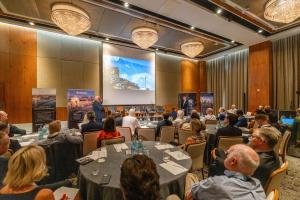
Microsoft keynote speaker Khia Chukudebelu (center right) and SFLCT Chairman (center left), joined by representatives from their respective organizations at ALJ Group’s American Data Centers Forum
ALJ Group's conferences generate a radius of impact beyond the events themselves, advancing multi-sectoral collaboration that extends to the upcoming American Data Centers Construction Forum”— Fernando C. Hernandez, SFLCT Chairman of the Board
During ALJ Group’s “American Data Centers Forum: From Building to Powering,” the Society for Low Carbon Technologies (SFLCT) served as the connective tissue for three separate ALJ Group conferences that all took place within a single week. Those gatherings covered Liquefied Natural Gas (LNG), hydrogen and Carbon Capture Utilization Storage (CCUS), and data centers—seemingly distinct sectors that SFLCT helped reveal as deeply interwoven.
Also worth a look: Mitolyn, Built Around the Purple Peel Exploit, has been Launched, Designed to Enhance Mitochondrial Health & Manage Weight and Out Today: “My Favorite Things” by Award-winning Vocalist Nicole Henry.
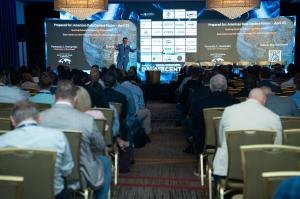
That linkage came into focus when SFLCT Chairman of the Board Fernando C. Hernandez opened the data center forum as Event Chair and Master of Ceremonies with a presentation titled “Data Centers and the Strait of Hormuz: The Next Compute Cycle.” Following his remarks, Khia Chukudebelu, Partner and General Manager, Datacenter Global Supply Chain at Microsoft, delivered the keynote address, “From Building to Powering: Enabling the Next Era of AI at Scale.” Hernandez, who has firsthand experience at the Strait of Hormuz (documented in “illuminem”), explored how the Middle Eastern conflict ripples through energy systems, carbon management infrastructure, digital networks, and the specialized gases and raw materials that underpin the global semiconductor supply chain.
Hernandez pointed to reported attacks on Ras Laffan’s co-located LNG and Carbon Capture Storage (CCS) infrastructure as a potential trigger that could recarbonize LNG supplies. That scenario exposes a critical weakness in the natural gas–CCS model the U.S. is pursuing to power AI data centers with lower-carbon electricity. He also noted that reported strikes on regional data centers demonstrate how physical warfare now directly targets digital infrastructure, an entirely new dimension of modern conflict. These developments carry implications that extend well beyond what Hernandez called the “next compute cycle,” touching LNG, ammonia, specialized gases, subsea fiber networks, advanced chip manufacturing, and digital sovereignty. The same applies to wartime AI deployment by a leading large language model company amid the Hormuz conflict.
Drawing a line from Hormuz to Taiwan, Hernandez highlighted TSMC’s Arizona expansion as a case study in geographic diversification for advanced chipmaking. SFLCT, through former Government Affairs Director Alissa Nixon, engaged with Congressman Abe Hamadeh (AZ-08), whose district hosts TSMC’s fabrication infrastructure. The logic is straightforward: because TSMC manufactures chips designed by NVIDIA and other technology leaders, securing global AI compute requires pairing diversified fabrication with resilient energy systems. Hernandez warned that just as conflict around Hormuz threatens energy flows, concentrating advanced chipmaking in Asia risks creating a “digital Strait of Hormuz”—a potentially calamitous geopolitical chokepoint for global AI infrastructure.
In her keynote, Chukudebelu framed AI as a transformative technology and outlined Microsoft’s global data center footprint, supported by more than 185,000 miles of optical fiber. She detailed Microsoft’s sustainability commitments, including becoming carbon negative, water positive, and zero waste by 2030, and removing historical emissions dating to 1975 by 2050. Her closing message reinforced “From Building to Powering,” emphasizing that advancing AI infrastructure requires an entire ecosystem moving together.
Both Hernandez and Chukudebelu will return for ALJ Group’s upcoming “American Data Centers Construction Forum,” with Chukudebelu serving as Event Chair and Hernandez moderating the opening plenary. Hernandez concluded by stating that “ALJ Group's conferences generate a radius of impact beyond the events themselves, advancing multi-sectoral collaboration that extends to the upcoming American Data Centers Construction Forum.”
*Publishing note: The views expressed are those of SFLCT, a federally recognized U.S.-based 501(c)(3) nonprofit, and do not necessarily reflect the positions of any organizations or individuals referenced herein. This publication is shared for news-reporting, educational, community-impact, and non-commercial purposes. No endorsement is implied. These purposes align with SFLCT's federal tax-exempt status. Images are reproduced for contextual, analytical, and educational purposes, where permitted under applicable copyright law, including fair use provisions. *
Press Relations
Society for Low Carbon Technologies
Visit us on social media:
LinkedIn
Why it matters: The convergence of energy security, geopolitical conflict, and AI infrastructure means that decisions made in the Strait of Hormuz or semiconductor fabs in Arizona will directly shape the pace and resilience of the AI revolution. As companies like Microsoft scale their data center footprints, the industry must confront the uncomfortable reality that its supply chains are exposed to the same physical and political risks that have long plagued the energy sector.